John Smith Explorer: Biography, Pocahontas, Death & Quotes
Most of us think we know the story: a young Native American woman throws herself between an English prisoner and his executioners. That dramatic rescue may be more fiction than fact, but the real John Smith was every bit as remarkable as the legend – this biography separates documented history from romantic myth, tracing his path from soldier of fortune to the man who literally put Virginia and New England on the map.
Born: c. 1580 (baptized 6 January 1580) ·
Died: 21 June 1631 (aged ~51) ·
Known for: Founding Jamestown, exploring Virginia, writings on New England ·
Key work: A True Relation (1608), The Generall Historie of Virginia (1624) ·
Knighted: Yes, by Prince Sigismund Báthory of Transylvania
Quick snapshot
- Smith was a leader at Jamestown (1608-1609) (Encyclopaedia Britannica)
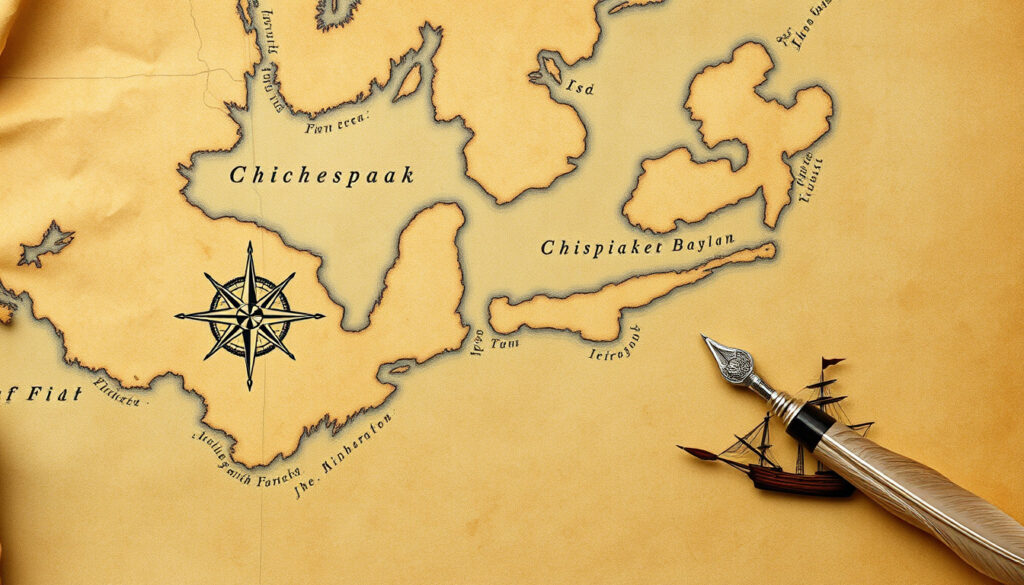
- He explored and mapped Chesapeake Bay and New England (National Park Service)
- He never married and had no known children (Encyclopaedia Britannica)
- He died in London in 1631 (Encyclopaedia Britannica)
- The details of the Pocahontas rescue story are contested (National Park Service)
- The exact cause of Smith’s death is unknown (Encyclopaedia Britannica)
- The extent of Smith’s self-aggrandizement is debated by historians (National Park Service)
- 1607: Smith arrives at Jamestown (World History Encyclopedia)
- 1608-1609: Serves as colony president (Wikipedia)
- 1614: Maps and names New England (Encyclopaedia Britannica)
- 1631: Dies in London (Encyclopaedia Britannica)
- Historians continue to re-evaluate Smith’s accounts against contemporary records (Historic Jamestowne)
- His maps remain some of the earliest detailed cartography of North America (National Park Service)
Seven facts about John Smith, one pattern: his life was marked by constant reinvention — soldier, explorer, governor, prisoner, pirate-fighter, and finally author. What follows is the data.
| Attribute | Value |
|---|---|
| Full Name | John Smith |
| Baptism Date | |
| Death Date | |
| Occupation | Soldier, explorer, author, admiral |
| Notable Colony | Jamestown, Virginia |
| Knighted By | Prince Sigismund Báthory of Transylvania |
| Famous Quote | “He that will not work, shall not eat” |
What is John Smith best known for?
His role in the Jamestown settlement
John Smith is best known as one of the founders of the Jamestown settlement — the first permanent English colony in North America, according to Encyclopaedia Britannica. He arrived in 1607 as one of the colony’s seven council members and, by 1608, had become its president. Smith imposed a brutal but effective rule: anyone who did not work would not eat. That rule, which he recorded in his writings, helped the colony survive its first two years.
The National Park Service describes Smith’s leadership, writings, maps, and negotiations with Native peoples as “invaluable” to both the Virginia Company of London and the Plymouth colony in Massachusetts. Jamestown had been close to collapse when Smith took charge.
Smith’s discipline saved Jamestown from starvation in 1608-1609, but his authoritarian style made enemies among the colonists — enough that he left Virginia in 1609 after a gunpowder injury and never returned.
The implication: Smith’s leadership was effective but divisive, a pattern that would repeat throughout his life.
Writings and maps of Virginia and New England
Smith’s second great contribution came through his pen. In 1608 he published A True Relation, one of the first English accounts of Virginia. In 1614, after exploring the coast north of Virginia, he mapped and named “New England” — the first English cartographer to use that term. His 1624 work The Generall Historie of Virginia, New-England, and the Summer Isles became the definitive early history of English colonization in North America, as noted by Encyclopaedia Britannica.
The National Park Service says his maps and writings directly persuaded English investors to fund further colonial ventures.
Smith was also a relentless self-promoter. His later accounts expanded his own heroism, making it difficult for historians to separate fact from embellishment.
Was Pocahontas involved with John Smith?
The rescue story: fact or fiction?
This is the most famous — and most contested — episode in Smith’s life. According to Smith’s account, written years after the event, he was captured by Powhatan warriors in December 1607 and brought before Chief Powhatan at Werowocomoco. As Smith’s head was laid on a stone, he wrote, “Pocahontas, the King’s daughter, got my head in her arms and laid her own upon mine to save me from death.”
But Historic Jamestowne, the official preservation authority, calls this story “legendary” and notes that Smith himself did not include it in his earliest account (1608). He only published the rescue narrative in 1624, nearly two decades later, after Pocahontas had died and could not contradict him.
The National Park Service reports that most historians and anthropologists believe an event did occur — but that Smith likely misinterpreted a symbolic adoption ceremony as a rescue.
Pocahontas as a diplomatic intermediary
What is not in dispute: Pocahontas (whose real name was Matoaka) played a real diplomatic role. Encyclopaedia Britannica states she was about 10 or 11 years old when she first met Smith. She visited Jamestown, delivered food, and acted as an intermediary between the Powhatan Confederacy and the English settlers.
In 1616, when Pocahontas traveled to England with her husband John Rolfe and their son Thomas, Smith — then in London — visited her. Encyclopedia Virginia confirms this reunion. There is no evidence of any romantic relationship between them — that myth was invented by later writers and filmmakers.
The Pocahontas story made Smith famous, but it also distorted his historical legacy. The real Pocahontas was a child diplomat and later a cultural bridge — not a romantic heroine. Smith’s own embellishment ensured the legend outlived the facts.
What is John Smith’s famous quote?
“He that will not work, shall not eat”
Smith’s most famous saying — “He that will not worke, shall not eate” — appears in his 1624 work The Generall Historie of Virginia. It was not a philosophical statement but a literal order: at Jamestown, colonists who refused to farm or build would not receive rations. Encyclopaedia Britannica notes that Smith used this rule to enforce discipline during the colony’s near-collapse in the winter of 1608-1609, a period known as the Starving Time.
Other notable sayings
Smith also wrote extensively about his adventures. His descriptions of Virginia and New England were promotional — he wanted English readers to invest in colonization. Passages about “paradise” and “fertile soil” appear throughout his books, though these were often exaggerated to attract settlers, as Live Science reports.
The pattern: Smith’s quotes reveal a man who saw writing as a tool — for leadership, for reputation, and for recruitment. Every printed word served a purpose.
Did John Smith ever marry?
No record of marriage or children
According to Encyclopaedia Britannica, John Smith never married and had no known children. Despite spending years in England after 1609, and despite his prominence as an author and colonial promoter, there is no record of a wife or offspring in any contemporary document.
Speculations about romantic ties with Pocahontas
The persistent myth of a romance between Smith and Pocahontas has no basis in fact. Pocahontas married John Rolfe, an English tobacco planter, in 1614 — not Smith. Their marriage was a political alliance between the Powhatan Confederacy and the English colony. Historic Jamestowne emphasizes that Smith and Pocahontas had a diplomatic relationship, not a romantic one.
The implication: Smith’s personal life was defined by its absence. He was a man on the move, building a legacy through exploration and writing — not through family.
What did John Smith pass away from?
Cause of death
John Smith died in London on . The exact cause is not documented in surviving records; Encyclopaedia Britannica lists it as natural causes, possibly disease or age-related decline. He was approximately 51 years old.
Later years and legacy
Smith spent his final years in London, writing and advocating for English colonization. He never returned to America after his departure from Jamestown in 1609. He was buried at St. Sepulchre-without-Newgate in London, a church that still stands today. The National Park Service notes that his grave is unmarked — a quiet end for a man who spent his life seeking attention.
The pattern: Smith’s death in obscurity contrasts sharply with the lasting fame of his writings and legends.
What happened to John Smith in real life?
Post-Jamestown adventures
After his gunpowder injury in 1609 forced him back to England, Smith did not retire. In 1614, he led an expedition to the coast of what is now Maine and Massachusetts, mapping the shoreline and naming the region “New England.” He offered his services to the Plymouth Company and, later, to the Pilgrims, providing them with maps and advice — though they ultimately declined his offer to join them, according to National Park Service.
In 1615, Smith was captured by French pirates while attempting another transatlantic voyage. He escaped after three months of captivity, an episode he later wrote about at length.
Controversies and self-promotion
Smith’s greatest controversy is his own credibility. Historians have long noted that his accounts grew more dramatic with each retelling. His earliest writings (1608) describe his adventures matter-of-factly; his later works (1624) include elaborate rescue scenes, heroic battles, and supernatural providence. J.A. Leo Lemay, a scholar of early American literature, called Smith “a boastful promoter, but his contributions to English colonization are undeniable.”
The National Park Service acknowledges this tension: Smith’s accounts are valuable historical sources, but they require careful cross-referencing with other contemporary records.
Smith’s self-aggrandizement does not erase his real achievements. He truly led Jamestown through its most fragile period. He truly mapped vast stretches of coastline. But the legend he created — the Pocahontas rescue, the heroic adventurer — overshadows the more complex and impressive reality of a man who kept reinventing himself until the end.
Timeline
- c. 1580 — John Smith born in Lincolnshire, England (Encyclopaedia Britannica)
- 1590s — Learned soldiering in Netherlands; fought in Hungary against Ottomans (Encyclopaedia Britannica)
- 1602 — Wounded, captured, and enslaved; later escaped (Encyclopaedia Britannica)
- 1606–1607 — Joined the Virginia Company expedition; founded Jamestown (World History Encyclopedia)
- 1608 — Became president of Jamestown colony; exploration of Chesapeake Bay (Encyclopaedia Britannica)
- 1609 — Injured in gunpowder explosion; returned to England (Encyclopaedia Britannica)
- 1614 — Explored and mapped the New England coast; named the region (Encyclopaedia Britannica)
- 1615 — Captured by French pirates; escaped after three months (National Park Service)
- 1624 — Published The Generall Historie of Virginia, New-England, and the Summer Isles (Encyclopaedia Britannica)
- 21 June 1631 — Died in London; buried at St. Sepulchre-without-Newgate (Encyclopaedia Britannica)
Confirmed facts and open questions
Confirmed facts
- Smith was a leader at Jamestown (1608-1609) (Encyclopaedia Britannica)
- He explored and mapped Chesapeake Bay and New England (National Park Service)
- He never married and had no known children (Encyclopaedia Britannica)
- He died in London in 1631 (Encyclopaedia Britannica)
What’s unclear
- The details of the Pocahontas rescue story are contested; no contemporary corroboration exists (Historic Jamestowne)
- The exact cause of Smith’s death is unknown (Encyclopaedia Britannica)
- The extent of Smith’s self-aggrandizement in his writings is debated by historians (National Park Service)
Quotes from the sources
“Pocahontas, the King’s daughter, got my head in her arms and laid her own upon mine to save me from death.”
— John Smith, A True Relation (1608 version; the rescue narrative itself appears in the 1624 Generall Historie) (Encyclopaedia Britannica)
“He that will not worke, shall not eate.”
— John Smith, The Generall Historie of Virginia (1624) (Encyclopaedia Britannica)
“Smith was a boastful promoter, but his contributions to English colonization are undeniable.”
— J.A. Leo Lemay, literary historian, summarizing modern scholarship (National Park Service)
Summary
John Smith was neither the perfect hero of his own writings nor the villain some critics have made him. He was a pragmatic, ambitious, often ruthless man who used military discipline to save Jamestown, mapped territories that became the United States, and spun his own life into a founding myth of English America. For the modern reader, the challenge is not to debunk Smith — it is to see past the legend to the real figure underneath. The trade-off is clear: we can enjoy the Pocahontas story as a cultural touchstone, or we can read Smith’s actual words and maps and understand how one determined Englishman helped shape a continent.
historicjamestowne.org, neh.gov, enchantedlearning.com, simple.wikipedia.org, skien24.org
For a deeper look at the myths and realities surrounding his life, read about John Smiths Jamestown expedition and the Pocahontas legend.
Frequently asked questions
What was John Smith’s role in the Jamestown colony?
Smith was a founding member of the Jamestown council and served as its president from 1608 to 1609. He imposed work discipline, led exploration of the Chesapeake Bay, and negotiated with the Powhatan Confederacy. His leadership is credited with keeping the colony alive during its first two years. (Encyclopaedia Britannica)
Is the story of Pocahontas saving John Smith true?
Most historians believe an event took place, but there is no contemporary evidence for the rescue as Smith described it. He did not mention it in his 1608 account. By 1624, when he published the full story, Pocahontas was dead and could not respond. The National Park Service says Smith likely misinterpreted a symbolic adoption ceremony as a rescue. (National Park Service)
How old was Pocahontas when she met John Smith?
Pocahontas was about 10 or 11 years old when she first met Smith in 1607, according to Encyclopaedia Britannica. She was a child at the time, which is one reason historians dismiss the idea of a romantic relationship. (Encyclopaedia Britannica)
Was John Smith ever a pirate?
No — but he was captured by French pirates in 1615 and held for three months before escaping. His experience with pirates was as a prisoner, not a practitioner. (National Park Service)
What books did John Smith write?
Smith’s major works include A True Relation (1608), A Map of Virginia (1612), A Description of New England (1616), and The Generall Historie of Virginia, New-England, and the Summer Isles (1624). These were among the first English-language accounts of North American colonization. (Encyclopaedia Britannica)
Did John Smith ever return to America after 1609?
No. After a gunpowder explosion forced him back to England in 1609, Smith never returned to Virginia or any American colony. He spent the rest of his life in England writing, mapping, and promoting colonization. (Encyclopaedia Britannica)
Where is John Smith buried?
Smith was buried at St. Sepulchre-without-Newgate in London. His grave is unmarked. (Encyclopaedia Britannica)
Why is John Smith considered a controversial figure?
Smith is controversial because his writings are both a primary historical source and a vehicle for self-promotion. He exaggerated his exploits, possibly fabricated the Pocahontas rescue story, and presented himself as central to events that involved many other people. Yet his real contributions — leadership at Jamestown, mapping of New England, and promotional writing that drove colonization — were substantial. (National Park Service)
More related posts
 Frank Ocean: Verified Facts on Controversies, Health, and Music
 Garth Brooks: Health Rumors, LGBTQ Stance & 2026 Tour Updates
 What Causes Lower Back Pain in Females? 15 Causes & Red Flags
 Bowel Cancer Poop Pictures – Stool Signs And Changes Guide
 Sammy Virji: Ethnicity, Real Name, Genre, Booking Fee
 Tyrique George: Collapsed Transfer, Everton Move & Salary
 Gemma Arterton: Polydactyly, Children, Relationship & More
 Nikki Sanderson: IVF, Baby Joy, and Career Updates
