Nicholas Winton: The Man Who Saved 669 Children from Holocaust
For nearly 50 years, Nicholas Winton told no one—not even his wife—that as a young British stockbroker he had organized the rescue of 669 children from Nazi-occupied Czechoslovakia. This article traces how he pulled off that rescue, what became of the children, and why his story only emerged in 1988.
Children rescued: 669 · Countries involved: Czechoslovakia to Great Britain · Year operation began: 1938 · Age at time: 29
Quick snapshot
- 669 children rescued across eight transports (United States Holocaust Memorial Museum (official Holocaust research institution))
- Operation lasted from March to August 1939 (United States Holocaust Memorial Museum (official Holocaust research institution))
- Winton was knighted in 2003 (United States Holocaust Memorial Museum (official Holocaust research institution))
- Exact number of children who survived to adulthood versus those lost in the war is not fully documented
- Whether Winton’s personal financial contributions were critical or secondary to the rescue effort remains debated
- First transport departed Prague on March 14, 1939—one day before the German occupation of Czechoslovakia (United States Holocaust Memorial Museum)
- Last train left on August 2, 1939; a final train scheduled for September 1 was cancelled due to war (United States Holocaust Memorial Museum)
- Descendants of rescued children now number over 6,000, and Winton’s legacy continues through educational programs and museum exhibits
- Recognition efforts include calls for a permanent memorial in Prague
From the data above, a clear pattern emerges: the operation’s speed and secrecy were defining characteristics.
| Attribute | Detail |
|---|---|
| Full Name | Sir Nicholas George Winton (né Wertheim) |
| Born | May 19, 1909, Hampstead, London |
| Died | July 1, 2015, Slough, England (age 106) |
| Children Rescued | 669 |
| Main Transport Method | Eight trains from Prague to London |
| Primary Source of Records | Winton’s scrapbook discovered in 1988 |
Who is Nicholas Winton and what did he do?
Early life and career
- Born Nicholas Wertheimer on May 19, 1909, in West Hampstead, London, to parents of German Jewish ancestry (United States Holocaust Memorial Museum).
- His parents had him baptized into the Anglican Church, and the family later changed their surname to Winton.
- He worked as a stockbroker in London before the war.
The rescue operation (1938–1939)
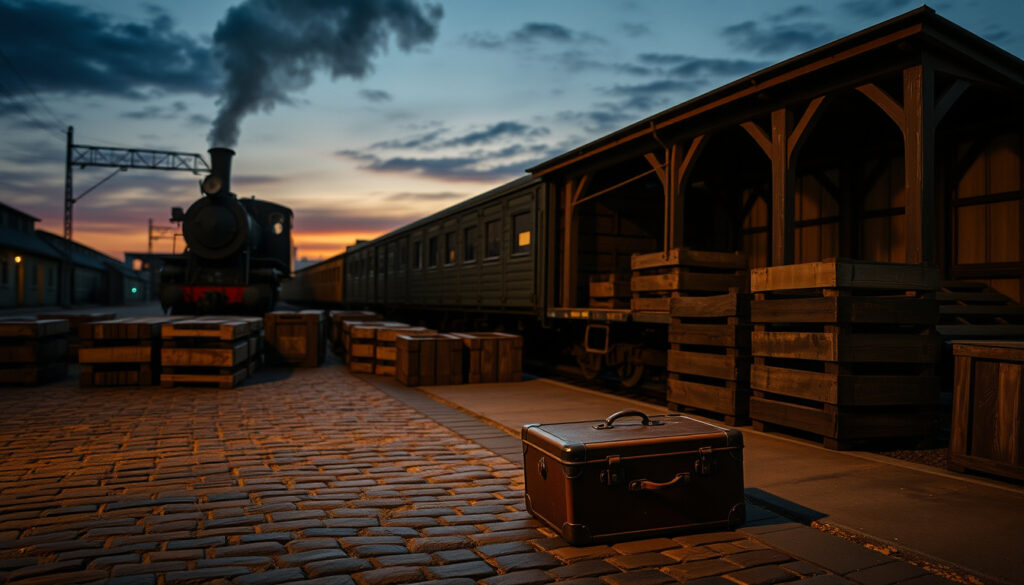
After the Nazi annexation of the Sudetenland, Winton traveled to Prague in December 1938 at age 29. He saw refugee camps packed with Jewish families and decided to help. Working with the British Committee for Refugees from Czechoslovakia, he began arranging transports of unaccompanied children to Great Britain. The first organized transport left Prague by plane on March 14, 1939 (United States Holocaust Memorial Museum). German forces occupied the Czech lands the next day.
Over the next five months, Winton coordinated eight train and plane transfers, bringing a total of 669 children—mostly Jewish—from Czechoslovakia to Britain. He found foster homes, raised funds, and even forged entry permits when official channels stalled. The last transport left Prague on August 2, 1939; a final train planned for September 1 was cancelled when Germany invaded Poland and war was declared (National Holocaust Centre and Museum (UK education centre)).
For a single private citizen to organize a cross-border rescue of over 600 children in under a year, with no official mandate and in the face of a collapsing diplomatic order, is remarkable. Winton’s operation was part of the broader Kindertransport, which eventually brought about 10,000 unaccompanied children to safety in Great Britain (Holocaust Museum Houston (Holocaust education center)).
Secrecy and later discovery
- After the war, Winton told almost no one about his rescue work—not even his wife Grete.
- In 1988, Grete discovered a scrapbook in the attic containing photographs and a complete list of the children’s names (United States Holocaust Memorial Museum).
- She convinced him to share the story, leading to a BBC appearance on That’s Life! in April 1988.
What happened to the children saved by Nicholas Winton?
Integration into British foster families
The children were placed with British foster families, many in London and the surrounding areas. Most never saw their biological parents again—their families perished in the Holocaust. The British government, through the Kindertransport program, required each child to have a guarantor who would house and support them (United States Holocaust Memorial Museum).
Post-war lives and legacies
- Many of the children grew up to become British citizens and started families of their own.
- Some later emigrated to Israel, the United States, and other countries.
- The exact number of survivors today is unknown, but descendants of the rescued children are estimated at more than 6,000.
Reunions and recognition
Winton remained in contact with many of the now-adult children. A notable reunion occurred on the BBC’s That’s Life! in 1988, when dozens of them surprised him in the audience. The moment—captured on video—became one of the most celebrated acts of recognition for a Holocaust rescuer.
It is not that I did something special. It is that I did something that was needed.
— Sir Nicholas Winton, 2003 interview (National Holocaust Centre and Museum)
Did Nicholas Winton’s wife know about his rescue efforts?
Grete Winton’s role and knowledge
Nicholas married Grete Gjelstrup in 1948. For 40 years, she had no knowledge of the scrapbook or his wartime rescue work. Winton never mentioned the children or the transports (United States Holocaust Memorial Museum). When Grete finally discovered the documents in the attic in April 1988, she was stunned—and immediately urged him to bring the story to light.
The box of documents discovered in 1988
The scrapbook contained photographs, passenger lists, and letters from host families. It became the primary historical record of Winton’s rescue effort. Without Grete’s discovery, the story might have remained buried indefinitely (United States Holocaust Memorial Museum).
Winton’s silence was not unusual for rescuers of that era—many avoided the spotlight. But his wife’s accidental find shows how easily such acts can be lost to history. The scrapbook now resides at the Holocaust Memorial Museum in Washington, D.C.
Who saved the most Jews from the Holocaust?
Winton’s rescue of 669 children is one of the largest child-rescue operations, but other individuals saved more people in total.
Raoul Wallenberg’s rescue mission in Budapest
- Wallenberg, a Swedish diplomat, issued protective passports and set up safe houses in Budapest, saving tens of thousands of Hungarian Jews in 1944–45.
- Exact numbers are disputed, but estimates range from 20,000 to 100,000 (Holocaust Memorial Day Trust (UK charity)).
Oskar Schindler’s list
- Schindler, a German industrialist, saved about 1,200 Jews by employing them in his factories.
- His story was popularized by the film Schindler’s List.
Other notable rescuers
Countless others—diplomats, clergy, ordinary citizens—risked their lives to hide or transport Jews. The exact totals for many rescuers remain uncertain because wartime records are incomplete (United States Holocaust Memorial Museum).
Nicholas Winton’s legacy and recognition
Honors and awards
- Knighted by Queen Elizabeth II in 2003 for services to humanity (United States Holocaust Memorial Museum).
- Awarded the Czech Order of the White Lion in 2014.
- A statue of Winton stands at Prague’s main railway station.
The Power of Good movie
The documentary The Power of Good: Nicholas Winton (2002) by Slovak filmmaker Matej Mináč tells his story and includes reunion footage. It won an International Emmy Award.
Later life and death
Sir Nicholas Winton died on July 1, 2015, at the age of 106, in Slough, England (Holocaust Memorial Day Trust). He lived long enough to see his story shared globally and to witness the growth of the community of rescued children and their descendants.
Timeline of the Winton rescue
- – Winton cancels a skiing trip to visit refugee camps in Prague.
- – First transport of children leaves Prague for London (United States Holocaust Memorial Museum).
- – Last transport departs Prague (National Holocaust Centre and Museum).
- – Scheduled final train cancelled due to German invasion of Poland.
- – Grete Winton discovers scrapbook in the attic.
- – BBC’s That’s Life! reunites Winton with many rescued children.
- – Knighted by Queen Elizabeth II.
- – Dies at age 106.
Clarity: What we know and what remains unclear
Confirmed facts
- 669 children were rescued across eight transports.
- The operation ran from March to August 1939.
- Winton’s scrapbook was discovered by his wife in 1988.
- He was knighted in 2003.
- He died on July 1, 2015 at age 106.
What’s unclear
- How many of the 669 children survived the war and how many eventually perished.
- Whether Winton’s own financial contributions were essential or modest in the overall rescue effort.
- The exact number of descendants today—estimates are around 6,000 but not confirmed.
Quotes from Sir Nicholas Winton
I saw what was happening and just did what I could.
— Nicholas Winton, reflecting on his motivation (National Holocaust Centre and Museum)
It is not that I did something special. It is that I did something that was needed.
— Sir Nicholas Winton, 2003 interview (Holocaust Memorial Day Trust)
For future generations, the lesson of Winton’s quiet courage is clear: even a single individual, acting without authority, can alter the course of hundreds of lives—or walk away. The choice Winton made in 1938, at age 29, created a legacy that now spans the globe. Winton’s story offers a concrete, verifiable answer to whether one person can make a difference.
facebook.com, en.wikipedia.org, nicholaswinton.com, kindertransport.org
The remarkable story of Nicholas Winton was brought to life in the 2023 film One Life, a biographical drama starring Anthony Hopkins.
Frequently asked questions
How many children did Nicholas Winton actually save?
Documents show 669 children were rescued across eight transports. The scrapbook lists 664 names; five additional children were identified later by researchers working on the 2002 documentary (United States Holocaust Memorial Museum).
Why did Nicholas Winton keep his rescue efforts secret?
He never gave a definitive reason. He told interviewers he saw his actions as ordinary and did not want praise. His wife Grete discovered the records only in 1988.
Did any of the children saved by Winton return to Czechoslovakia?
A few returned after the war, but most remained in Britain, emigrated to Israel, the United States, or other countries. Many never saw their original families again.
What was the name of the BBC show that revealed Winton’s story?
The episode aired on That’s Life! in April 1988. Host Esther Rantzen orchestrated the reunion.
Where did the rescued children settle?
Most were placed with foster families in Great Britain, primarily in London and the south of England. Some later moved to Israel, the United States, Canada, and Australia.
Is there a museum dedicated to Nicholas Winton?
No dedicated museum exists, but his scrapbook is housed at the United States Holocaust Memorial Museum in Washington, D.C. A statue of Winton stands at Prague’s Main Railway Station, and the Maidenhead Synagogue in the UK has a memorial garden.
Related reading
- Ben Cohen: Ice Cream Co-Founder’s Life of Activism – The story of another British humanitarian figure.
- Jilly Cooper: Books, Family, and Legacy – Biographical exploration of a major British writer, similar in style to this profile.
- United States Holocaust Memorial Museum – Nicholas Winton article
- National Holocaust Centre and Museum – Sir Nicholas Winton blog
More related posts
 Elena Rybakina: Biography, Nationality Change, Health
 Mr Motivator: What He Does Now, Net Worth, Wife, and More
 Matthew Macfadyen: Biography, Movies, Wife, and Accent
 Jeff Hardy: Why He Left WWE, Sobriety, Net Worth & TNA Return
 David Lynch Cause of Death, LGBTQ Views, Irish Ancestry & More
 Olivia Wilde 2025: Relationship, Career & Controversies
 Andy Murray Net Worth – $100M Earnings Breakdown
 Cindy Sherman Guide: Self-Portraits, Net Worth, Most Expensive Photo
