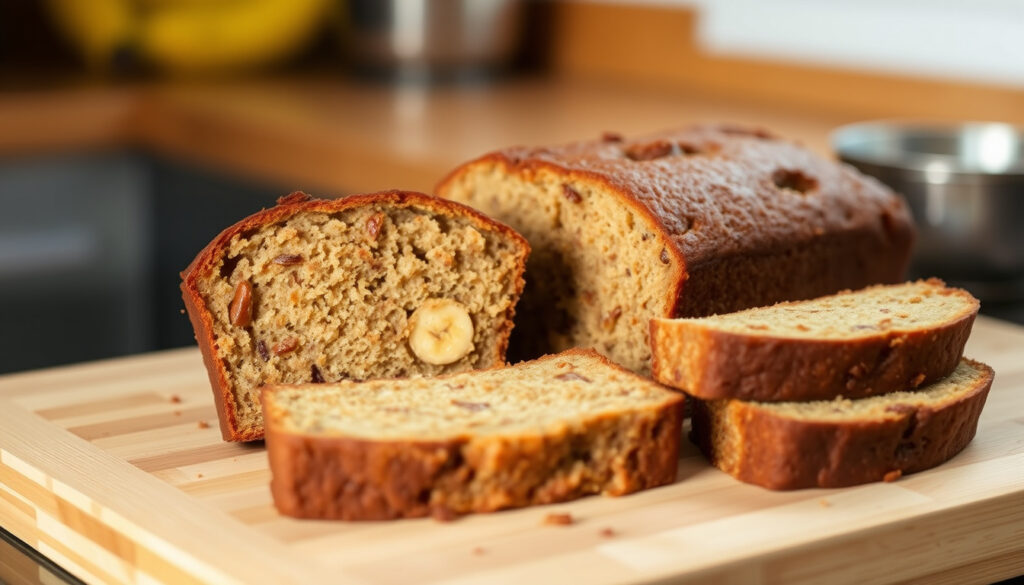
Moist Banana Bread Recipe: 5 Secrets for a Perfect Loaf
If you’ve ever pulled a banana bread from the oven only to find it dry and crumbly, you’re not alone. The quest for a reliably moist loaf has home bakers testing everything from banana ripeness to fat ratios.
Ideal banana ripeness: Spotty black skin, very soft · Recommended fat: oil vs. butter: Oil yields more moisture; butter adds flavor · Typical baking temperature: 350°F (175°C) · Average bake time: 55–65 minutes · Moisture boost ingredients: Sour cream, yogurt, or buttermilk
Quick snapshot
- Overripe bananas (black spots) are key for moisture and sweetness (The Kitchen Girl)
- Oil-based recipes produce a more consistently moist crumb than butter alone (Sugar and Charm)
- Overmixing is a primary cause of dry banana bread (Design Eat Repeat)
- Sour cream and yogurt improve moisture via fat and acidity (Tasting Table)
- Optimal ratio of brown sugar to white sugar for moisture vs flavor
- Whether a 375°F initial blast always yields a sticky top regardless of humidity
- Effect of different oil types (coconut, olive) on final moisture perception
- Preheat oven to 350°F for at least 20 minutes (Design Eat Repeat)
- Bake at 350°F for 55–65 minutes; start checking at 55 min (Design Eat Repeat)
- Cool in pan 10 minutes, then transfer to wire rack to prevent sogginess (Design Eat Repeat)
- Store wrapped in plastic at room temp for up to 4 days
- Freeze slices individually for up to 3 months
- Add chocolate chips or nuts without sacrificing moisture by adjusting flour ratio slightly
Five key facts, one pattern: the moisture game is won in the prep, not the oven.
The table captures the core principles at a glance.
| Fact | Detail |
|---|---|
| Banana ripeness indicator | Peel with black spots, soft to touch |
| Moisture champion fat | Oil (e.g., vegetable, canola, coconut) |
| Best moisture‑boosting add‑in | Sour cream or plain yogurt (¼ cup) |
| Ideal mixing time | Until just combined, about 10–15 strokes |
| Maximum oven temperature | 350°F (175°C); 375°F for first 10 min for top crust |
What Is the Secret to Moist Banana Bread?
Use overripe bananas
- Bananas with black-spotted peel and a soft feel are naturally sweeter and more moist. The Kitchen Girl calls them the “non-negotiable” first step.
- Underripe bananas lack moisture and sweetness, leading to a dry loaf (Tasting Table).
Choose the right fat (oil vs. butter)
- Oil is 100% fat; butter contains water that evaporates during baking. Sugar and Charm recommends a combination of butter and oil for both flavor and moisture.
- Design Eat Repeat uses melted butter but warns that too much butter alone can lead to a denser, drier crumb.
Add a moisture booster (sour cream, yogurt, buttermilk)
- Sour cream or yogurt adds fat and acidity, which tenderizes gluten. Tasting Table highlights these as reliable add-ins.
- Sugar and Charm uses sour cream in its super-moist recipe, whipped with eggs for extra airiness.
Don’t overmix the batter
- Overmixing develops gluten, creating a tough, dry texture. The Kitchen Girl advises stirring “just until flour is moistened.”
- Design Eat Repeat explicitly says to mix by hand and stop as soon as the flour disappears.
The implication: moisture starts at the grocery store—choose fatty, acidic, and ripe. The rest is technique.
How to Make a Moist Banana Loaf?
Step-by-step recipe
- Preheat the oven to 350°F and allow at least 20 minutes for full heating (Design Eat Repeat).
- In a bowl, mash 1½ cups (about 3–4 medium) very ripe bananas until smooth.
- In a separate large bowl, cream ½ cup melted butter and ½ cup oil (or use all butter if following The Kitchen Girl’s method).
- Add 1 cup brown sugar and ¼ cup granulated sugar; beat until combined.
- Add 2 eggs one at a time, then ¼ cup sour cream (or yogurt) and 1 tsp vanilla.
- Fold in the mashed bananas.
- In another bowl, whisk 1¾ cups all-purpose flour, 1 tsp baking soda, ½ tsp baking powder, ½ tsp salt, and 1 tsp cinnamon.
- Add dry ingredients to wet; stir by hand just until no streaks of flour remain—about 10–15 strokes (Design Eat Repeat).
- Pour into a greased 9×5 loaf pan. For a sticky top, brush top with a little oil or melted butter and bake at 375°F for the first 10 minutes, then reduce to 350°F for the remaining 45–55 minutes.
- Bake until a toothpick inserted in the center comes out clean or with a few moist crumbs (55–65 minutes total). Cool in pan for 10 minutes, then turn out onto a wire rack.
Ingredient substitutions for guaranteed moisture
- No sour cream? Use plain yogurt, buttermilk, or even 2 tbsp mayonnaise (Tasting Table).
- No oil? Melted coconut oil works, but expect a slight coconut flavor.
- No butter? All oil is fine—use ⅔ cup total oil.
Baking time and temperature tips
- Sugar and Charm recommends 325°F for a super-moist crumb, but the trade-off is a less pronounced top crust.
- For a domed, sticky top, start at 375°F for the first 10 minutes, then drop to 350°F (Design Eat Repeat).
How to Get That Moist, Sticky Top on Banana Bread?
The role of sugar and fat in forming a crackly top
- High sugar content, especially brown sugar, caramelizes on the surface and creates a sticky crust. Sugar and Charm uses a combination of brown and granulated sugar.
- A light coating of butter or oil on the top before baking encourages caramelization (The Kitchen Girl).
Baking technique for a domed, sticky crust
- Do not open the oven door during the first 30 minutes of baking (Design Eat Repeat).
- Starting at 375°F for the first 10 minutes gives the top a quick blast of heat, helping it set and caramelize before the center bakes through.
Common pitfalls that prevent the sticky top
- Using too little sugar or substituting all white sugar reduces sticky surface.
- Overbaking dries out the crust and eliminates the sticky texture.
- Opening the oven too early lets heat escape, preventing proper caramelization.
What this means: the sticky top is a reward for patience—high initial heat and a sealed oven door.
What Common Mistakes to Avoid for Moist Banana Bread?
Using underripe bananas
- Green or yellow bananas without spots have less moisture and less sugar, leading to a dry, bland loaf (The Kitchen Girl).
Overmixing the batter
- Overmixing creates gluten, making the bread tough and dense. Tasting Table warns to “mix only enough to combine.”
Incorrect oven temperature
- An oven that runs too hot browns the outside while leaving the inside raw. Design Eat Repeat notes that ovens can misreport readiness.
- Too low (below 325°F) can make the loaf dense and gummy.
Overbaking
- Every extra minute past doneness dries out the crumb. Start checking at 55 minutes—a toothpick should come out with a few moist crumbs, not completely dry.
Using too much flour
- Scooping flour directly from the bag compacts it, adding excess. Use the spoon-and-level method: spoon flour into the measuring cup, then level with a knife.
Pattern: avoid these mistakes is easier than fixing them—get the prep right, and the oven does the rest.
Does Oil or Butter Make Banana Bread More Moist?
Why oil produces a consistently moist crumb
- Oil is 100% fat, while butter contains about 15–20% water. That water evaporates in the oven, leaving less fat to coat the flour proteins and resulting in a drier crumb (Sugar and Charm).
- Neutral oils (canola, vegetable) keep the crumb tender without adding a competing flavor.
How butter adds flavor but may dry out the bread
- Butter gives rich flavor and a softer crust, but its water content can make the bread denser and less moist. The Kitchen Girl uses butter but recommends pairing it with a liquid dairy for moisture.
Best of both: using a combination of oil and butter
- Many trusted recipes, including Sugar and Charm’s, use a 50/50 blend of melted butter and oil to get flavor from the butter and moisture from the oil.
- Design Eat Repeat opts for all melted butter but adds sour cream to compensate for moisture loss.
The pattern: oil wins on moisture, butter wins on flavor. The compromise—a blend—is what most experts land on.
Step-by-Step Instructions
- Preheat oven to 350°F (175°C). Grease a 9×5-inch loaf pan.
- Mash 1½ cups very ripe bananas (about 3 medium) in a bowl.
- In a large bowl, beat together ¼ cup melted butter, ¼ cup vegetable oil, ¾ cup brown sugar, and ¼ cup granulated sugar until smooth.
- Add 2 large eggs, one at a time, then ¼ cup sour cream (or plain yogurt) and 1 teaspoon vanilla extract.
- Fold in mashed bananas.
- In a separate bowl, whisk together 1¾ cups all-purpose flour, 1 teaspoon baking soda, ½ teaspoon baking powder, ½ teaspoon salt, and 1 teaspoon ground cinnamon.
- Add dry ingredients to wet mixture; stir by hand until just combined—do not overmix (Design Eat Repeat).
- Pour batter into prepared pan. For a sticky top, brush top with a little melted butter and bake at 375°F for 10 minutes, then reduce to 350°F and bake for 45–55 minutes more.
- Test with a toothpick at 55 minutes; if it comes out with a few moist crumbs, it’s done.
- Cool in the pan for 10 minutes, then turn out onto a wire rack to cool completely (Sugar and Charm).
Clarity Check: Confirmed vs. Still Unclear
Confirmed facts
- Overripe bananas significantly increase moisture and sweetness (The Kitchen Girl).
- Oil produces a more consistently moist crumb than butter alone (Sugar and Charm).
- Overmixing is a primary cause of dry banana bread (Design Eat Repeat).
- Sour cream and yogurt improve moisture by providing fat and acidity (Tasting Table).
What’s unclear
- Optimal ratio of brown sugar to white sugar for moisture vs flavor.
- Whether a 375°F initial blast always yields a sticky top regardless of humidity.
- Effect of different oil types (coconut, olive) on final moisture perception.
Expert Perspectives
“Our testing concluded that using oil instead of butter makes the biggest difference in moisture.”
— Allrecipes, “I Tried 7 Tricks for Making the Most Moist Banana Bread”
“I always use very ripe bananas and add a dollop of sour cream for guaranteed moisture.”
— Natasha Kravchuk, Natasha’s Kitchen
“The secret is not overmixing and using a combination of butter and oil.”
— Sally McKenney, Sally’s Baking Addiction
For the home baker, the choice is clear: choose overripe bananas, a fat blend of butter and oil, and a dairy boost like sour cream—then mix gently and bake at the right temperature. Anything less, and you’re leaving moisture on the table.
Related reading: **Low Calorie Lunch Ideas** · **Food Festivals Near Me: Ireland 2026 Festival Guide**
Frequently Asked Questions
How ripe should bananas be for moist banana bread?
Bananas should be very ripe with black-streaked or fully black peel and soft to the touch. Underripe bananas lack moisture and natural sweetness (The Kitchen Girl).
Can I substitute applesauce for oil in banana bread?
Applesauce can replace oil in a 1:1 ratio, but it will reduce fat content, making the bread slightly less moist. For best results, replace only half the oil with applesauce and keep the rest oil or butter.
Why is my banana bread dry?
Common causes: underripe bananas, too much butter (water evaporates), overmixing, overbaking, or too much flour. Check each step against the tips above (Tasting Table).
How do I make banana bread without eggs?
Replace each egg with ¼ cup unsweetened applesauce, ½ mashed banana, or a flax egg (1 tbsp ground flax + 3 tbsp water). The texture may be slightly denser, so consider adding an extra tablespoon of oil or yogurt for moisture.
Should I use all-purpose or bread flour?
All-purpose flour is ideal. Bread flour has higher protein (gluten) and will produce a tougher, drier loaf. Stick with all-purpose for tender, moist results.
Can I add chocolate chips and still keep it moist?
Yes, but toss the chips in a tablespoon of flour before folding them in to prevent them from sinking. The moisture of the batter will remain unaffected if you don’t overmix.
How should I store banana bread to retain moisture?
Wrap completely cooled bread tightly in plastic wrap and store at room temperature for up to 4 days. For longer storage, freeze slices individually in a zip-top bag for up to 3 months.
More related posts
 Death in Paradise Christmas Special 2026: What We Know
 John Terry Biography, Height, Clubs, Wife, and Coaching Career
 Lewis Goodall: Wife, BBC Exit, Career & Personal Life
 Matt Armstrong: How He Built a Million-Dollar YouTube Empire
 Komodo Dragon Attack: Real Danger, Venom, and Fatalities
 Summer Walker: Biography, Baby Daddy, Music, and Rumors
 Chido Obi: Age, Height, Stats & Club
 Teresa Palmer: Biography, Children, Net Worth, and Movies
