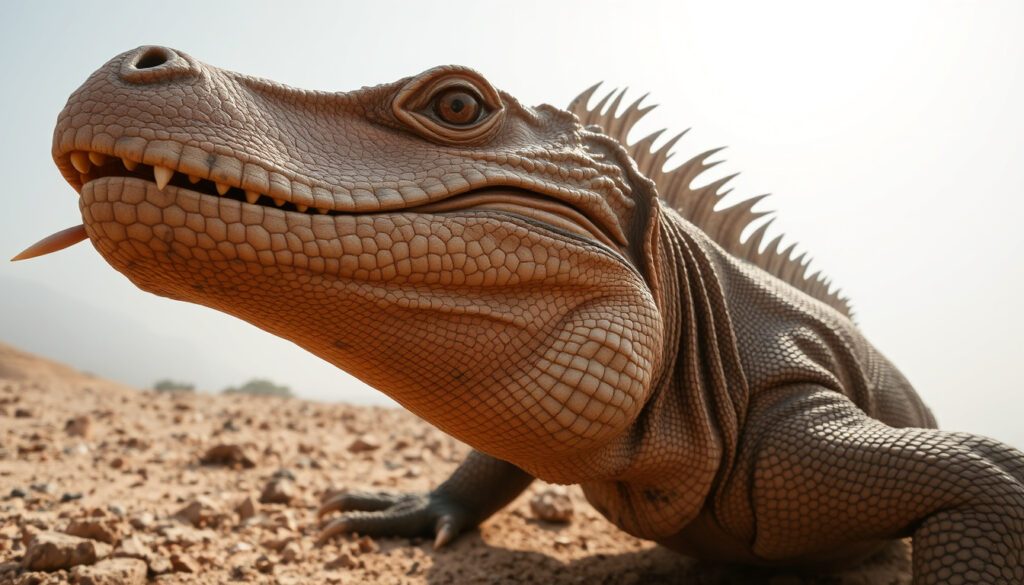
Komodo Dragon Attack: Real Danger, Venom, and Fatalities
There aren’t many animals that can send a chill down your spine just by being mentioned, but the Komodo dragon is one of them. This guide separates the real danger of the world’s largest lizard from the tall tales, looking at actual attack statistics, the science behind its venomous bite, and what its endangered status means for the few thousand dragons left in the wild.
Average length: 8–10 feet (2.5–3 meters) · Maximum weight: 200 pounds (90 kg) · Venomous bite: Yes · Estimated wild population: Fewer than 3,500 · Recorded human deaths (since 1974): At least 5
Quick snapshot
- Largest living lizard, up to 10 feet and 200 pounds (Smithsonian National Zoo)
- Venom glands in lower jaw deliver a toxic protein (Smithsonian National Zoo)
- Phil Bronstein bitten at LA Zoo in 2001 (Smithsonian Magazine)
- Exact number of human fatalities per year remains uncertain (Wikipedia)
- Relative importance of venom vs bacteria in killing prey is still debated (ScienceDirect)
- Effectiveness of antivenom is unknown (PubMed Central)
- 1974–2012: 24 human attacks recorded in Komodo National Park (Wikipedia)
- 2007: Fatal attack on an 8-year-old boy in Komodo (Smithsonian Magazine)
- 2021: Zookeeper bitten in US, no systemic symptoms (PubMed Central)
- Rising sea levels threaten the dragon’s island habitats (Natural History Museum)
- Human-wildlife conflict expected to increase as settlements expand (Global Conservation)
- Conservation focus on habitat protection and ecotourism management (Komodo Survival Program)
The snapshot facts make one thing clear: Komodo dragons are both biologically remarkable and genuinely dangerous, but the scale of the danger is often misunderstood.
Here is a quick reference table of the dragon’s key biological specs.
| Attribute | Details |
|---|---|
| Maximum Length | 10 feet (3 meters) |
| Maximum Weight | 200 lbs (90 kg) |
| Venom | Yes, with venom glands |
| Habitat | Indonesian islands of Komodo, Rinca, Flores, Gili Motang |
| Population | Fewer than 3,500 |
| Lifespan | Up to 30 years in wild |
Will a Komodo dragon attack a human?
Yes, Komodo dragons are apex predators that can and do attack humans under specific conditions — typically when they feel provoked, are hungry, or when humans encroach on their territory. But attacks are rare compared to many large predators. A dataset from Komodo National Park covering 1974 to 2012 recorded 24 human attacks, of which five were fatal, according to Wikipedia.
A visitor to Komodo National Park faces a lower attack risk than many assume — roughly one attack per 1.5 years across the entire park — but the consequences when an attack occurs are severe enough to demand respect.
Has a Komodo dragon killed a human?
- An 8-year-old Indonesian boy was killed in 2007 on Komodo Island — the first fatal attack in 33 years, as reported by Smithsonian Magazine.
- An elderly man was killed in 2000 on the island of Flores, according to Wikipedia.
- A 2021 case report in PubMed Central described a zookeeper bitten in the United States who suffered local tissue damage but no excessive bleeding or systemic symptoms, suggesting that prompt medical care and the specific circumstances of captive animals may reduce severity.
The implication: Fatalities are rare but real, and they cluster in rural Indonesia where the dragons roam freely near villages. The risks look very different for a local farmer versus a guided tourist.
Is Komodo dragon poisonous or not?
Komodo dragons are venomous, not poisonous. The distinction matters. For decades, textbooks described their bite as dangerous primarily because of bacteria-laden saliva that caused fatal infections. But later research identified venom glands in the lower jaw that produce a toxic protein, as documented by the Smithsonian National Zoo. The venom causes hypotension, hemorrhage, and shock in prey by preventing blood from clotting. A 2018 analysis found the venom works with the bacteria — the venom rapidly weakens the prey while bacteria from the mouth finish the job.
Anyone treated for a Komodo dragon bite needs care for both envenomation and infection — it’s not a single-mechanism injury. The 2022 case report in ScienceDirect noted that the relative importance of venom versus bacteria remains unclear in clinical settings.
What if a Komodo dragon licks you?
Licking is not dangerous. Venom is delivered through the bite, not through the tongue. A Komodo dragon’s forked tongue is used to sense chemical cues in the air, sampling the environment for prey. It can detect the scent of carrion from several miles away, but a lick poses no venom risk. However, a dragon that is close enough to lick you is close enough to bite — the greater risk is proximity, not the tongue itself.
The catch: The lick itself isn’t a threat, but it signals the dragon is curious about you as potential food. The real danger is the animal’s size, speed, and willingness to escalate.
Which animal kills a Komodo dragon?
Adult Komodo dragons have few natural predators — they sit at the top of the food chain on their home islands. But they are not invincible. The primary threats come from other large predators and, most significantly, from humans. Saltwater crocodiles are known to kill Komodo dragons when their territories overlap on larger islands like Flores, as reported by Wikipedia.
Do Komodo dragons kill each other?
- Larger Komodo dragons will kill and eat smaller ones, including juveniles — cannibalism is a well-documented survival strategy
- Young dragons spend their early years in trees to avoid being eaten by adults
- Humans kill dragons through habitat destruction, illegal hunting, and retaliatory killings after livestock attacks, per Global Conservation
The pattern: The dragon’s biggest enemy, aside from itself, is the same species that fears it — humans.
What celebrity got bitten by a Komodo dragon?
Phil Bronstein, then-executive editor of the San Francisco Chronicle and husband of actress Sharon Stone, was bitten on the foot in 2001 while visiting the Komodo dragon exhibit at the Los Angeles Zoo. The incident was widely reported because of Bronstein’s celebrity connection. According to Smithsonian Magazine, he required surgery and aggressive antibiotic treatment to prevent infection. The bite left him with permanent nerve damage in his foot.
What this means: Even in a controlled zoo environment, a Komodo dragon bite is a serious medical event. The Bronstein case became a public turning point that raised awareness about the real risk these animals pose.
How many humans are killed by Komodo dragons each year?
There are no precise annual statistics, but researchers estimate 0–1 deaths per year on average, concentrated in rural Indonesia. The Indonesian authorities record about two to three fatalities per decade. Most fatal attacks occur when locals — not tourists — enter the dragons’ territory or interfere with their food sources. The five documented deaths between 1974 and 2012 — from 24 recorded attacks — suggest a 20.8% fatality rate per attack, which is high compared to shark attacks (about 1.5% fatality rate) but far lower in absolute numbers.
“The venom rapidly weakens the prey by inducing hypotension and shock, making escape harder — it’s a sophisticated chemical weapon, not just a dirty bite.”
— Dr. Bryan Fry, venom expert, as cited by Smithsonian National Zoo
The trade-off: For the local farmer in Flores, the dragon is a real and present danger. For the international tourist, the risk is minimal but not zero.
What is the conservation status of the Komodo dragon?
The Komodo dragon is listed as Endangered on the IUCN Red List. The Komodo Survival Program reports this status, citing a 2021 assessment when the species was upgraded from Vulnerable. The Natural History Museum in London reported in 2021 that there were fewer than 1,400 adult Komodo dragons remaining, with the total population including juveniles estimated at 3,458 by Global Conservation. For comparison, the population was estimated at 5,000 in 1981 and dropped to 3,222 by 2013.
Threats include:
- Rising sea levels that could flood nesting habitats, as documented by the Natural History Museum
- Habitat loss from agriculture and development, per Global Conservation
- Illegal hunting and retaliatory killings after livestock attacks
- Climate change altering prey availability and island ecosystems
Related reading: Ben Lomond Hike: Beginner Guide · Horseback Riding in Ireland: Costs & Weight Limits
reddit.com, ksdae.kehutanan.go.id, sciencedirect.com, facebook.com, popculturedaily.co.uk
Frequently asked questions
How fast can a Komodo dragon run?
Komodo dragons can reach speeds of up to 12 mph (20 km/h) in short bursts. While they cannot sustain this pace for long, it is fast enough to cover short distances quickly — faster than most humans can sprint.
What should you do if you encounter a Komodo dragon in the wild?
Stay calm and back away slowly. Do not run — the dragon can outrun you in a sprint. Keep at least 30 feet (10 meters) of distance, avoid direct eye contact, and never feed the animal. If you are in Komodo National Park, you will be accompanied by a trained ranger who carries a forked stick for defense.
Are Komodo dragons endangered?
Yes. The IUCN Red List classifies the Komodo dragon as Endangered, with fewer than 1,400 adult individuals remaining and a total population estimated at fewer than 3,500.
How do Komodo dragons hunt their prey?
Komodo dragons are ambush predators that use their camouflage, powerful legs, and sharp claws to attack prey. They bite with a venomous delivery that causes rapid blood pressure drop and shock, then track the weakened animal for days until it dies from envenomation or infection.
Can you keep a Komodo dragon as a pet?
No. Keeping a Komodo dragon as a pet is illegal in most countries, impossible for ethical and safety reasons, and requires specialized facilities. They are dangerous, venomous wild animals that grow to 10 feet and 200 pounds. Only accredited zoos with proper permits can house them.
What is the difference between a Komodo dragon and a monitor lizard?
The Komodo dragon is a species of monitor lizard — specifically the largest species in the Varanidae family. While all Komodo dragons are monitor lizards, not all monitor lizards are Komodo dragons. The key differences are size (Komodo dragons are much larger), habitat (only found on a few Indonesian islands), and venom potency (Komodo dragon venom is studied for its unique properties).
How long do Komodo dragons live?
Komodo dragons can live up to 30 years in the wild. In captivity, with proper care and veterinary attention, they have been known to live even longer — up to 40 years in some historical zoo records.
More related posts
 NHS Dentists Taking New Patients: How to Find & Register
 Mercedes Sprinter Van for Sale Ireland: Prices & Listings
 Jimmy Connors Today: Podcast, Family, Life After Tennis (2024)
 Things to Do in York – Top Attractions, Itineraries and Tips
 Daniel Kaluuya: Nationality, Ethnicity, Relationship & Career Facts
 Phil Spector: Conviction, Death, and Wall of Sound Legacy
 Max Mayfield in Stranger Things: Status & Season 5
 Jalen Brunson: His Family, Wife, Daughter, and NBA Career
