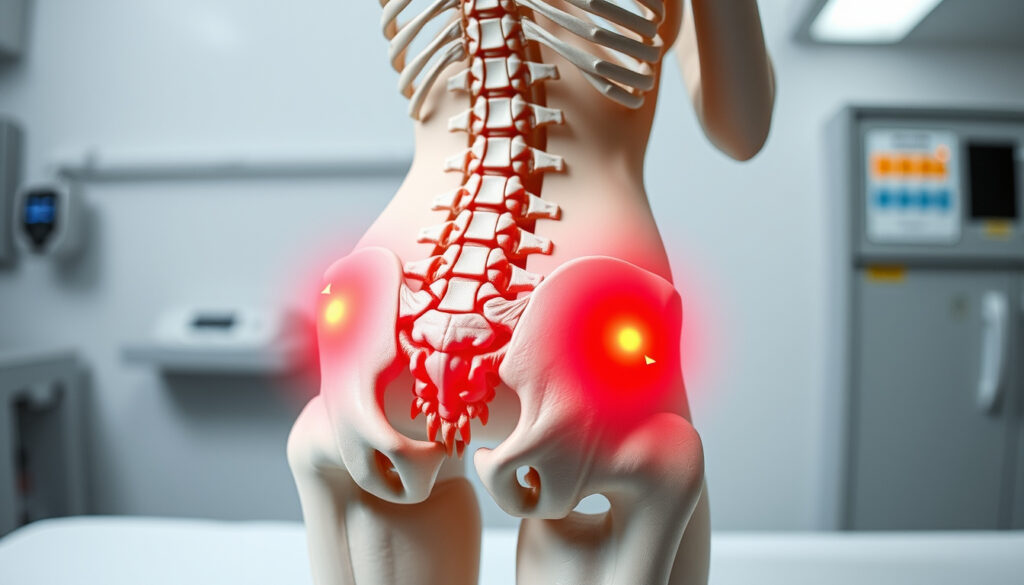
What Causes Lower Back Pain in Females? 15 Causes & Red Flags
That familiar ache in your lower back can feel like it showed up for no reason — but for women, the possible triggers are surprisingly diverse. From muscle strain to menstrual cramps, endometriosis to kidney stones, the reasons behind female lower back pain span far beyond a simple “bad back.”
Women affected by lower back pain at some point: approximately 80% ·
Most common cause in premenopausal women: menstrual cramps and endometriosis ·
Red flag conditions requiring urgent care: cauda equina syndrome, cancer, infection ·
Annual visits for back pain in the US: over 15 million
Quick snapshot
- Muscle strain and ligament sprain are the most common causes (Cleveland Clinic (nonprofit academic medical center))
- Endometriosis affects 1 in 10 women of reproductive age and is a confirmed cause of chronic pelvic and low back pain (Hospital for Special Surgery (orthopedic specialty hospital))
- Core strengthening exercises reduce recurrence of chronic low back pain by 30-50% (StatPearls via NCBI Bookshelf (peer-reviewed medical database))
- Whether fibroids alone cause low back pain (they are often painless) (Hospital for Special Surgery (orthopedic specialty hospital))
- Optimal frequency and duration of exercise specifically for postpartum back pain (Hospital for Special Surgery (orthopedic specialty hospital))
- Whether specific yoga poses are safer than others for herniated discs (Hospital for Special Surgery (orthopedic specialty hospital))
- Pain persisting beyond 6 weeks is a red flag warranting evaluation (Consultant360 (clinical review platform))
- Acute back strain typically resolves in 4 to 6 weeks with conservative care (Cleveland Clinic (nonprofit academic medical center))
- Neurologic deficits that progress over hours to days signal emergency pathology (American College of Emergency Physicians (emergency medicine professional organization))
- Start with conservative care: activity modification, heat/ice, and OTC pain relief (StatPearls via NCBI Bookshelf (peer-reviewed medical database))
- If symptoms include red flags — bowel/bladder changes, leg weakness, or fever — seek emergency care immediately (American College of Emergency Physicians (emergency medicine professional organization))
- Build core strength with the McGill Big 3 exercises to reduce recurrence risk (StatPearls via NCBI Bookshelf (peer-reviewed medical database))
Generic back pain advice misses what’s different for women. Gynecological causes — endometriosis, fibroids, menstrual cramps — are routinely overlooked, which means thousands of women spend months chasing the wrong diagnosis. Knowing the female-specific triggers is the fastest path to the right treatment.
The data below shows how common lower back pain is among women and what treatments make the biggest difference.
| Key Fact | Value |
|---|---|
| Lifetime prevalence in women | 80% |
| Most common gynecological cause | Endometriosis (affects 1 in 10 women of reproductive age) (Hospital for Special Surgery (orthopedic specialty hospital)) |
| Percentage of back pain cases that are red flag | Less than 1% |
| Average recovery time for acute back strain | 4 to 6 weeks (Cleveland Clinic (nonprofit academic medical center)) |
| Exercise effectiveness for chronic pain | Reduces recurrence by 30-50% (StatPearls via NCBI Bookshelf (peer-reviewed medical database)) |
What causes lower back pain in females?
Lower back pain in women isn’t one thing — it’s a collision of possible triggers that range from everyday muscle strain to reproductive organ conditions that don’t show up on a standard spine X-ray. Most cases are mechanical and benign, but the female anatomy adds several layers of complexity.
Muscle and ligament strain
- The most common cause of acute low back pain in all adults, including women. Strains happen when muscles or ligaments overstretch or tear, often from lifting, twisting, or sudden movement (Cleveland Clinic (nonprofit academic medical center)).
- Mechanical or functional injury accounts for roughly 97% of all lower back pain cases (Hospital for Special Surgery (orthopedic specialty hospital)).
- Recovery typically takes 4 to 6 weeks with conservative care — activity modification, ice, heat, and OTC anti-inflammatories.
Gynecological causes — endometriosis, fibroids, menstrual cramps
- Endometriosis affects an estimated 1 in 10 women of reproductive age and can compress pelvic nerves, causing referred pain in the lower back (Hospital for Special Surgery (orthopedic specialty hospital)).
- Menstrual cramps (dysmenorrhea) cause uterine contractions that radiate into the lower back — a pattern many women know but few realize is a legitimate medical driver of back pain.
- Uterine fibroids are common but often painless; when they do cause symptoms, lower back pain can occur if fibroids press on surrounding nerves or organs.
Degenerative conditions — osteoarthritis and spinal stenosis
- Osteoarthritis affects the facet joints in the lower spine, leading to stiffness and pain that worsens with activity (Cleveland Clinic (nonprofit academic medical center)).
- Spinal stenosis — a narrowing of the spinal canal — can compress nerves and cause pain that radiates down the legs, especially when walking.
- Degenerative disc disease reduces the cushioning between vertebrae, which can irritate nearby nerves and produce chronic low back pain.
Pregnancy-related back pain
- Pregnancy shifts the center of gravity forward, increasing the load on the lumbar spine by 40-50% as the baby grows.
- Hormonal changes — specifically relaxin — loosen ligaments throughout the pelvis and lower back, which can lead to instability and pain.
- Postpartum back pain is common and often linked to weakened core muscles after delivery, plus the physical demands of carrying and feeding a newborn.
How do I tell if my lower back pain is serious?
The vast majority of lower back pain is mechanical and self-limiting. But a small fraction signals something dangerous — infection, cancer, nerve compression, or cauda equina syndrome. The key is knowing which symptoms to take seriously.
Red flag symptoms requiring immediate medical attention
- Loss of bladder or bowel control is a hallmark of cauda equina syndrome — a surgical emergency that requires decompression within 24-48 hours to prevent permanent paralysis (American College of Emergency Physicians (emergency medicine professional organization)).
- Saddle anesthesia — numbness in the areas that would contact a saddle — is another cauda equina red flag (American College of Emergency Physicians (emergency medicine professional organization)).
- Progressive motor weakness in the legs, especially if it’s rapid, warrants immediate evaluation (Consultant360 (clinical review platform)).
- Fever with back pain raises suspicion for spinal infection (discitis, osteomyelitis, or epidural abscess), especially in people with recent spinal procedures, IV drug use, or immunosuppression (StatPearls via NCBI Bookshelf (peer-reviewed medical database)).
When to call 911 or visit emergency
- Sudden loss of bowel or bladder function.
- Rapidly worsening leg weakness or inability to walk.
- Back pain after a significant fall or accident (possible fracture).
- Back pain accompanied by chest pain, shortness of breath, or signs of aortic dissection (tearing sensation in the chest or back).
Non-urgent vs urgent back pain characteristics
- Non-urgent: mechanical pain that improves with rest or position change, no neurologic symptoms, no systemic signs (fever, chills, weight loss).
- Urgent: pain that is constant, worse at night, unrelieved by rest, or accompanied by unexplained weight loss — these patterns raise concern for malignancy (StatPearls via NCBI Bookshelf (peer-reviewed medical database)).
- People under 18 or over 50 with new-onset back pain are in a higher-risk demographic for serious underlying causes (Consultant360 (clinical review platform)).
Red flags are rare — less than 1% of back pain cases involve a serious underlying condition — but missing them has catastrophic consequences. The rule of thumb: if you have even one of the red flag symptoms, get evaluated. Don’t wait to see if it gets better.
What are the big 3 for lower back pain?
Developed by Dr. Stuart McGill at the University of Waterloo, the “Big 3” exercises are designed to stabilize the core without stressing the spine. They target different core muscle groups and are among the most evidence-recommended exercises for chronic low back pain (StatPearls via NCBI Bookshelf (peer-reviewed medical database)).
The McGill Big 3 aren’t flashy moves — there’s no crunch, no leg lift, no twisting — and that’s the point. They build endurance in the muscles that protect your spine, not the ones that look good in a gym mirror.
How to perform the curl-up correctly
- Lie on your back with one leg straight and the other bent (knee up).
- Place your hands under your lower back to maintain the natural curve.
- Lift your head and shoulders just a few inches off the ground — no more. Hold for 10 seconds, breathing steadily.
- Do not pull with your neck; the movement comes from the upper abdominals only.
Side bridge technique
- Lie on your side with your legs stacked, propped up on your forearm (elbow directly under shoulder).
- Lift your hips so your body forms a straight line from head to feet.
- Hold for 10-15 seconds per side. Do not let your hips sag or rotate forward.
- Targets the quadratus lumborum and oblique muscles — key lateral stabilisers of the spine.
Bird dog exercise
- Start on all fours with hands under shoulders and knees under hips.
- Simultaneously extend your right arm forward and left leg backward, keeping your hips and shoulders square.
- Hold for 5-10 seconds, then switch sides. Never let your lower back sag or arch.
- Engages the core and back extensors simultaneously, training the body to resist spinal rotation and extension under load.
What diseases start with lower back pain?
Some conditions announce themselves with lower back pain long before their more recognisable symptoms appear. Knowing which diseases can start this way helps you catch them early.
Ankylosing spondylitis
- An inflammatory arthritis that primarily affects the sacroiliac joints and spine, typically starting in young adults (under 40). The pain is worse with rest and improves with movement — the opposite of mechanical back pain.
- It’s more common in women than previously thought, though often underdiagnosed because women tend to present with atypical symptoms like neck or hip pain.
Endometriosis and adenomyosis
- Endometriosis can cause cyclical lower back pain that correlates with the menstrual cycle, often dismissed as “normal period pain” (Hospital for Special Surgery (orthopedic specialty hospital)).
- Adenomyosis — where endometrial tissue grows into the uterine muscle — can cause chronic pelvic and lower back pain, especially during periods and intercourse.
Kidney stones and urinary tract infections
- Kidney stone pain is typically felt in the flank (side of the back) and radiates downward toward the groin. It’s often described as one of the most intense pains a person can experience (Hospital for Special Surgery (orthopedic specialty hospital)).
- A UTI that spreads to the kidneys (pyelonephritis) can cause fever, chills, and lower back pain along with urinary symptoms.
Spinal tumors and metastatic cancer
- Primary spinal tumors are rare, but metastatic cancer (breast, lung, prostate, renal) frequently spreads to the spine. Back pain from malignancy is often constant, worse at night, and unrelieved by rest (StatPearls via NCBI Bookshelf (peer-reviewed medical database)).
- A history of cancer — especially breast cancer in women — combined with new back pain should trigger a low threshold for imaging.
What are 5 red flags of low back pain?
Red flags are clinical indicators that raise suspicion for serious underlying pathology. They don’t confirm the diagnosis — they tell you to investigate further. Here are the five most critical ones for women.
- Unexplained weight loss — unintentional loss of 5% or more of body weight over 6-12 months, especially in someone over 50, can signal malignancy or infection (StatPearls via NCBI Bookshelf (peer-reviewed medical database)).
- Fever or chills — back pain with fever suggests spinal infection (osteomyelitis, discitis, or epidural abscess), particularly in patients with diabetes, recent surgery, or IV drug use (StatPearls via NCBI Bookshelf (peer-reviewed medical database)).
- Bowel or bladder incontinence — loss of control is a cauda equina red flag and requires emergency neurosurgical evaluation (American College of Emergency Physicians (emergency medicine professional organization)).
- Progressive motor weakness — leg weakness that worsens over days or weeks suggests nerve root compression or spinal cord compromise (Consultant360 (clinical review platform)).
- Saddle anesthesia — numbness in the perineum, buttocks, and inner thighs is pathognomonic for cauda equina syndrome (American College of Emergency Physicians (emergency medicine professional organization)).
A single red flag doesn’t automatically mean disaster — but two or more together significantly raise the stakes. Cauda equina syndrome, for example, typically presents with at least three of these five red flags simultaneously. If you’re checking off more than one, do not wait for a primary care appointment. Go to the emergency department.
What is the one best exercise for lower back pain?
If there’s a single exercise that earns the “best” label for lower back pain, the bird dog is the strongest contender. It engages the core and back extensors simultaneously, builds balance and coordination, and doesn’t load the spine in a flexed position.
Why the bird dog exercise is often recommended
- It trains the body to resist spinal rotation and extension — two movement patterns that commonly trigger pain in people with disc issues or instability.
- Unlike crunches or sit-ups, the bird dog keeps the spine in a neutral position and recruits the deep stabilisers (transversus abdominis, multifidus) that protect the vertebrae.
- It’s scalable: beginners can start with just the leg extension, and advanced users can add ankle or wrist weights.
Step-by-step bird dog technique
- Start on all fours, hands directly under shoulders, knees under hips, spine in a neutral position (not sagging or arching).
- Engage your core by drawing your navel toward your spine — this is the starting position.
- Slowly extend your right arm forward and your left leg backward simultaneously, keeping your hips square to the ground.
- Hold the extended position for 5-10 seconds while breathing steadily.
- Return to the starting position and repeat on the opposite side (left arm, right leg).
- Perform 6-8 reps per side, 2-3 times per week on non-consecutive days.
Modified versions for beginners
- Start with just the leg extension (keep both hands on the ground) or just the arm extension (keep both knees on the ground).
- If you have knee pain, place a folded towel under your knees for cushioning.
- If wrist pain is an issue, perform the bird dog on your forearms (elbows on the ground) instead of hands.
Exercises to avoid with acute back pain
- Full sit-ups and crunches — they compress the spine and can worsen disc herniations.
- Toe touches — full forward flexion increases intradiscal pressure and can aggravate existing injuries.
- Russian twists and other rotational exercises — twisting under load is a common mechanism of disc injury.
- Heavy deadlifts or squats — these should be postponed until pain-free and cleared by a clinician.
What’s confirmed and what’s unclear
Confirmed facts
- Muscle strain is the most common cause of acute low back pain in women (Cleveland Clinic (nonprofit academic medical center))
- Endometriosis is a confirmed cause of chronic pelvic and low back pain (Hospital for Special Surgery (orthopedic specialty hospital))
- Red flag symptoms — bowel/bladder dysfunction, saddle anesthesia, fever, progressive weakness — require urgent medical evaluation (American College of Emergency Physicians (emergency medicine professional organization))
- Core strengthening exercises improve outcomes for chronic low back pain (StatPearls via NCBI Bookshelf (peer-reviewed medical database))
What’s unclear
- Exact prevalence of fibroids causing low back pain alone (they are often painless)
- Whether specific yoga poses are safer than others for people with herniated discs
- Optimal frequency and duration of exercise specifically for postpartum back pain
- How often ovarian cysts cause isolated lower back pain without pelvic symptoms
Expert perspectives
“Back pain in women often originates from reproductive organs compressing nerves. It’s not just about the spine — evaluating the pelvis and abdomen is critical.”
— Dr. Karen H., Hospital for Special Surgery (orthopedic specialty hospital)
“Red flags should never be ignored, but they are rare in primary care. The challenge is balancing appropriate concern with the reality that 97% of back pain is mechanical.”
— Cleveland Clinic spine specialist, Cleveland Clinic (nonprofit academic medical center)
“The Big 3 exercises are designed to spare the spine while building endurance. They’re not about strengthening in the traditional sense — they’re about building a muscular corset that protects the spine during daily activities.”
— Stuart McGill, PhD, University of Waterloo, cited in StatPearls (peer-reviewed medical database)
Lower back pain in women is rarely a straightforward mechanical problem. The anatomy is more complex, the hormonal influences are real, and the red flags — while rare — can be life-altering if missed. For the woman reading this: trust your body’s patterns. If your pain is cyclical, get a gynecologic evaluation. If it’s constant or waking you at night, push for imaging. If you have any red flag symptoms, skip the clinic and head to the emergency room.
For women navigating this common but confusing symptom, the choice is clear: match your treatment to your specific cause, not a generic template. That means asking your clinician about female-specific triggers — endometriosis, fibroids, pregnancy-related changes — alongside the usual disc and muscle suspects. The right diagnosis is the shortcut to the right relief.
Frequently asked questions
Can lower back pain in females be a sign of pregnancy?
Yes. Lower back pain is common during pregnancy, especially in the second and third trimesters. The growing uterus shifts the center of gravity, increasing lumbar load, and the hormone relaxin loosens pelvic ligaments, which can create instability and pain. Many women also experience back pain in early pregnancy due to hormonal changes, though this is less common.
How long should I wait before seeing a doctor for lower back pain?
If you have any red flag symptoms — fever, loss of bowel or bladder control, leg weakness, numbness in the saddle area, or unexplained weight loss — see a doctor immediately. For mechanical back pain without red flags, wait 4-6 weeks with conservative care (activity modification, heat/ice, OTC pain relief). If the pain hasn’t improved by then, it’s time to be evaluated (Consultant360 (clinical review platform)).
Are there any home remedies that work for female lower back pain?
Yes. Heat therapy relaxes tight muscles; ice reduces inflammation in acute flare-ups. Gentle movement — walking, stretching, the McGill Big 3 exercises — is more effective than bed rest. Over-the-counter NSAIDs (ibuprofen, naproxen) can help with pain and inflammation. For menstrual-related back pain, heat packs on the lower abdomen and back, plus staying hydrated, can make a noticeable difference.
Does sleeping position affect lower back pain in women?
Yes. Sleeping on your stomach places strain on the lumbar spine. Better options: sleeping on your side with a pillow between your knees (to keep the hips aligned) or on your back with a pillow under your knees (to maintain the natural curve of the lower back). A medium-firm mattress generally provides the best support for people with back pain.
Can stress cause lower back pain in females?
Yes, indirectly. Stress triggers muscle tension, particularly in the lower back and shoulders. Chronic stress can lead to sustained muscle tightness that contributes to pain. Stress also affects sleep quality and pain perception, creating a cycle where pain causes more stress, which worsens pain. Stress management — therapy, meditation, regular exercise — is a valid component of back pain treatment.
What is the difference between sciatica and regular back pain?
Regular (mechanical) back pain is felt in the muscles and joints of the lower back. Sciatica is a specific type of pain caused by compression or irritation of the sciatic nerve, and it radiates from the lower back through the buttock and down one leg, often past the knee. Sciatica is usually caused by a herniated disc or spinal stenosis, while regular back pain is more often from muscle strain or arthritis.
Can birth control pills help with back pain caused by endometriosis?
Hormonal birth control — including pills, patches, rings, and IUDs — is a first-line treatment for endometriosis-related pain because it suppresses ovulation and reduces the growth of endometrial tissue. Many women experience significant relief from both pelvic and back pain on hormonal contraceptives. However, effectiveness varies, and birth control does not treat the underlying condition — it manages symptoms. A gynecologist can help determine the best option for your specific case.
More related posts
 Tom Brady Biography: Net Worth, Super Bowl Wins & Personal Life
 Alesha Dixon: Net Worth, Husband, Ethnicity, BGT Judge
 Tenacious D UK Tour 2026: Are They Coming? (Latest News)
 Shaun Wallace: Relationship, Career, Net Worth & Latest Updates
 Bang Chan: Stray Kids Leader, Biography, Age & Facts
 Phil Spector: Conviction, Death, and Wall of Sound Legacy
 Mos Def: Biography, Net Worth, and What Happened to Him
 Pamela Anderson Confirms Liam Neeson Romance: Health and Net Worth
