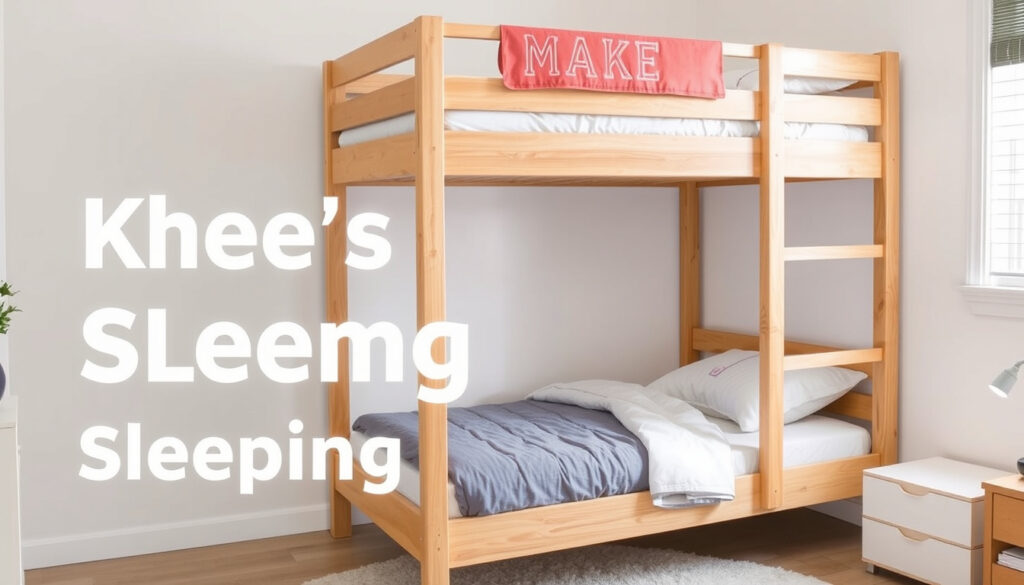
Bunk Bed Age Guide, Safety Rules, and Buying Tips
Anyone who’s ever shared a bedroom with a sibling already knows the appeal of a bunk bed: more floor space, more fun, and that top-bunk feeling of being captain of your own ship. But before you start shopping, there are hard rules — in Ireland and the UK, the top bunk isn’t safe for children under 6, and EN 747 standards set strict guardrail and mattress depth requirements.
First recorded use: 18th century on ships to save space ·
Minimum age for top bunk (Canada): 6 years old ·
Typical weight capacity: 200–250 pounds (90–113 kg) ·
Common materials: Wood and metal ·
Space saved vs. two separate beds: Up to 50% floor space
Quick snapshot
- Minimum 6 years for top bunk (UK government bunk bed safety regulations 1987)
- Younger children safe on bottom with supervision (UK government bunk bed safety regulations 1987)
- Adults can use heavy-duty models (JustBunkBeds age guidance)
- Guardrails required (Strictly Beds & Bunks safety guide)
- Mattress thickness limits (Beds.ie mattress advice for bunk beds)
- Ladder must be secure (Strictly Beds & Bunks safety guide)
- No kids under 6 on top (Strictly Beds & Bunks safety guide)
- Twin-over-twin
- Twin-over-full
- Loft beds
- Triple bunks
- Measure ceiling height (Strictly Beds & Bunks room measurement advice)
- Check weight capacity (JustBunkBeds weight limits info)
- Choose material (wood vs metal) (Strictly Beds & Bunks room measurement advice)
- Look for safety certification (Strictly Beds & Bunks room measurement advice)
Five key specifications, but one pattern: safety standards converge on the same minimums for age, guardrail height, and mattress depth irrespective of style.
| Specification | Value |
|---|---|
| Minimum age for top bunk | 6 years (Canada, US, UK guidelines) (UK government safety regulations) |
| Typical weight limit (kids model) | 200 lbs (90 kg) (JustBunkBeds weight limits) |
| Guardrail height standard | 5 inches above mattress (Strictly Beds & Bunks safety standards) |
| Most common size | Twin-over-twin |
| Space saved vs. two separate beds | ~50% floor area |
What age is appropriate for a bunk bed?
Can a 4 year old sleep on a bunk bed?
- No – the UK Bunk Beds (Entrapment Hazards) Regulations 1987 and similar guidelines in Canada and the US recommend a minimum age of 6 for the top bunk. A 4‑year‑old lacks the coordination and awareness to climb safely and is at higher risk of falls.
Bottom bunks may be used by children under 6 with full adult supervision, but the upper berth remains off‑limits.
What age is safe for the top bunk?
- Health Canada and the CPSC both set the threshold at 6 years old (The Bean Bag Store consumer safety review).
- Many Irish retailers echo that rule: Beds.ie and MK Furnishings state children under 6 should not sleep in the upper bunk.
The rule is consistent across jurisdictions because a fall from the top bunk can cause serious injury. The pattern is clear: wait until the child is 6 before allowing top‑bunk access.
Is 7 years old old enough for a bunk bed?
- Yes – most safety organisations consider 7 well above the minimum. At 7, children generally have the motor skills to climb a ladder and understand safety rules about not jumping or playing roughly on the bed (JustBunkBeds age recommendations).
Parents should still enforce the “no rough play” rule on the top bunk and regularly check that guardrails and ladder connections remain tight.
Can adults sleep on bunk beds?
- Yes, but only models rated for adult weight. Standard children’s bunk beds typically support up to 200 lbs (90 kg). Heavy‑duty adult bunk beds can hold 250–400 lbs (JustBunkBeds weight limits for adults).
- Full‑over‑full or twin‑over‑full configurations provide more sleeping surface for taller or larger users.
The catch: adult bunk beds are heavier and need careful ceiling‑height measurement – at least 10 ft to avoid hitting the top beam.
A 6‑year‑old who sleeps in the top bunk before the recommended age faces a documented fall risk. The regulation exists because entrapment and fall injuries among under‑6s are the reason the law was written (UK Legislation preamble on bunk bed hazards).
Why are they called bunk beds?
What is the origin of the term ‘bunk’?
- “Bunk” comes from Scottish and northern English dialect, referring to a sleeping berth on a ship (Wikipedia entry on bunk bed history).
The word originally meant a narrow built‑in bed, and it stuck because the design was born on sailing vessels where every inch of space counted.
When were bunk beds first used?
- Bunk beds appeared on ships and in military barracks as early as the 18th century to maximise sleeping capacity in confined quarters (Wikipedia bunk bed historical usage).
The same space‑saving principle that worked on a frigate later made bunk beds a natural fit for children’s bedrooms.
How did bunk beds become popular in homes?
- Mid‑20th century suburban housing often meant smaller children’s rooms. Manufacturers adapted the military and nautical design for domestic use, and by the 1960s bunk beds were a staple in many family homes.
- Today, Irish retailers like Love Furniture and Beds.ie sell bunk beds as space‑saving furniture for children’s rooms.
The implication: what started as a shipboard necessity has become a beloved bedroom solution for families who need to fit more into less space.
What is the bunk bed rule?
What is the 6-year rule for top bunks?
- The “6‑year rule” is the recommendation from Health Canada, the CPSC, and the UK Bunk Beds Regulations 1987 that children under 6 should not sleep in the upper bunk.
It is not a legal ban in every country, but it is the consensus of safety authorities and is enforced as a strict guideline by responsible retailers in Ireland.
Do bunk beds need guardrails?
- Yes. Guardrails are required on all sides of the top bunk that are above floor level. The standard height is at least 5 inches above the mattress surface (Strictly Beds & Bunks guardrail requirements).
- MK Furnishings emphasises rounded edges and secure guardrail fastening as essential safety features.
What are the CPSC requirements for bunk beds?
- The CPSC (U.S. Consumer Product Safety Commission) mandates guardrails on both long sides of the top bunk, a maximum mattress thickness of 6 inches to prevent entrapment, and ladder spacing that prevents child head entrapment.
- In the EU, the standard EN 747‑1 and EN 747‑2 cover similar requirements for bunk beds sold in Ireland and the UK.
The trade‑off: meeting these standards often makes bunk beds heavier and more expensive, but the safety benefit is proven.
More related posts
 Victoria Starmer: Biography, Ethnicity, Children, and More
 Low Calorie Lunch Ideas – Easy Recipes Under 400 Calories
 24/7 InPost Lockers: Availability, Usage & Locations Guide
 Bang Chan: Stray Kids Leader, Biography, Age & Facts
 William Ash Biography: Emmerdale Role & Personal Life
 Cruises from Southampton 2025: No-Fly Lines & Itineraries
 What Causes Lower Back Pain in Females? 15 Causes & Red Flags
 Lana Wolf: Career, Wheelchair, and Health Update
