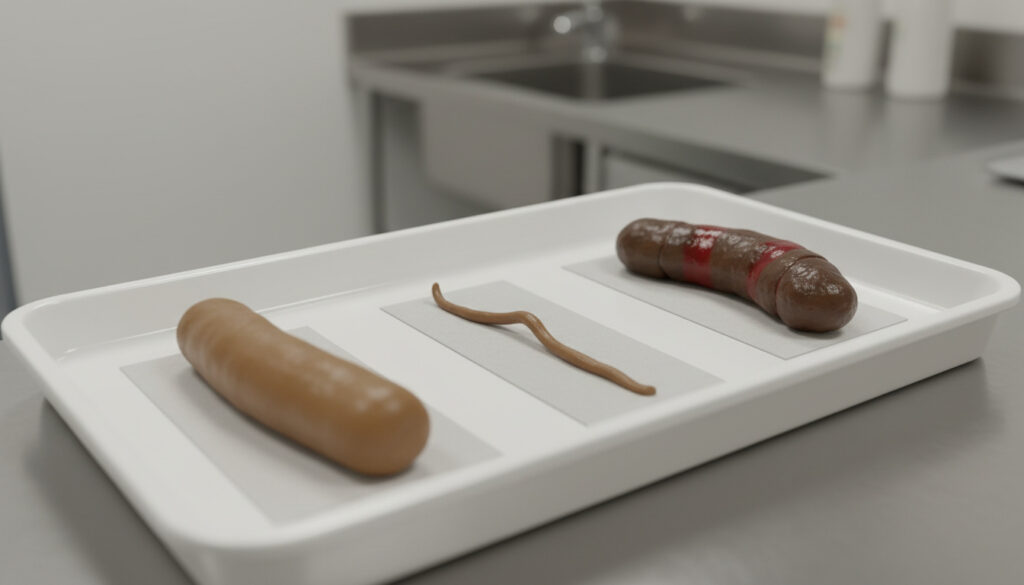
Bowel Cancer Poop Pictures – Stool Signs And Changes Guide
Changes in bowel habits often signal underlying health issues, yet distinguishing between temporary digestive upset and potential colorectal cancer remains challenging. Medical imaging and clinical descriptions reveal that bowel cancer produces distinct alterations in stool appearance, including variations in colour, shape, and texture that differ significantly from normal patterns.
Understanding these visual indicators requires examining how tumours interact with the intestinal tract. As growths develop within the colon or rectum, they gradually narrow the passage, irritate surrounding tissue, and may ulcerate—each change manifesting in observable ways when waste exits the body.
This guide examines the specific stool characteristics associated with bowel cancer, drawing upon clinical research and medical imaging descriptions to illustrate what patients and caregivers should recognise.
What Does Bowel Cancer Poop Look Like?
| Blood Signs | Shape Changes | Texture Alterations | Other Indicators |
|---|---|---|---|
| Bright red on paper or dark tarry within stool | Pencil-thin, ribbon-like, or flat and grooved | Clear or yellow mucus coating | Incomplete emptying sensation |
- Blood may appear as bright red streaks on toilet paper or as dark, tarry material mixed within stool
- Narrow, pencil-thin stools suggest partial obstruction of the intestinal passage
- Mucus coating indicates inflammation of the intestinal lining
- Changes persisting beyond several days warrant medical attention
- Early-stage tumours may cause no visible stool changes whatsoever
- Benign conditions like haemorrhoids often mimic cancerous bleeding
- Regular screening detects abnormalities before symptoms become visible
| Symptom | Description | Cancer Link | Action Required |
|---|---|---|---|
| Blood in stool | Visible red on surface or dark black throughout | High | Immediate GP consultation |
| Narrow stools | Pencil-thin or ribbon-like lasting over one week | Medium | Evaluation with other symptoms |
| Frequency changes | Alternating constipation and diarrhoea | Medium | Persistence warrants testing |
| Mucus coating | Clear or yellow slime adhering to stool | Medium | Assessment if persistent |
| Dark tarry stool | Black, sticky, foul-smelling material | High | Urgent medical review |
| Incomplete evacuation | Sensation of blockage or urgency without result | Medium | Investigation advised |
What Colour Is Bowel Cancer Poo?
Bright Red Indicates Lower Gastrointestinal Bleeding
Fresh, bright red blood typically indicates bleeding from the lower colon, rectum, or anus. According to NHS guidance, this presentation often suggests haemorrhoids or fissures, though tumours in the distal colon can produce identical appearances.
Dark or Black Suggests Upper Digestive Tract Involvement
Melena—stools appearing black, tarry, and sticky—generally indicates bleeding higher in the digestive system. The dark colour results from blood digestion during transit through the intestines. Mayo Clinic research notes this requires urgent evaluation.
Pale or Greasy Hues Signal Obstruction
Clay-coloured or pale stools may indicate bile duct obstruction, while greasy, floating stools suggest malabsorption issues. These colour shifts, combined with other symptoms, merit professional assessment.
Bright red blood typically originates from the lower colon or rectum, while dark, tarry stools suggest bleeding higher in the digestive tract and require urgent evaluation.
What Are Common Stool Changes Indicating Bowel Cancer?
The Narrow Stool Phenomenon
Tumours growing within the colon lumen gradually reduce passage diameter, forcing stool into thin, ribbon-like shapes. Cancer Research UK describes these as potentially appearing suddenly or developing gradually over weeks.
Mucus Production and Secretion Changes
Inflammation from malignant growths triggers excessive mucus secretion. Patients may notice clear or yellowish slime coating the stool surface or mixed within the faecal matter, sometimes accompanied by diarrhoea.
Consistency Fluctuations
Alternating between hard, pebble-like constipation and loose, mushy stools indicates disrupted transit. Clinical documentation links these shifts to partial obstruction affecting normal peristalsis.
How to Identify Blood in Stool from Bowel Cancer?
Differentiating cancer-related bleeding from benign causes requires careful observation of accompanying characteristics. While haemorrhoids typically produce bright red blood without altering stool shape, cancerous bleeding often coincides with narrowed stools, mucus, or persistent changes in bowel habits.
Dark, tarry black stools indicate bleeding from higher in the digestive tract and require urgent medical evaluation to rule out serious pathology.
Faecal immunochemical testing (FIT) provides preliminary detection of occult blood invisible to the naked eye. Fight Colorectal Cancer emphasises that screening identifies abnormalities before visible symptoms develop.
Faecal immunochemical testing can detect hidden blood before visible changes occur, with NHS programmes offering screening to adults between ages 45 and 75.
How Do Stool Changes Evolve as Bowel Cancer Progresses?
- Pre-cancerous stage: Benign polyps develop over 10 to 15 years, typically causing no stool changes initially.
- Early tumour growth: Subtle narrowing begins, potentially causing occasional thin stools or minor consistency shifts.
- Progressive obstruction: Blood appears intermittently as tumours ulcerate, mixing with mucus and creating altered colour patterns.
- Advanced disease: Significant obstruction produces persistent narrow stools, alternating constipation and diarrhoea, and potential complete blockage.
Colon Cancer Coalition resources indicate that early detection during the first two stages yields significantly better outcomes than later intervention.
Could Stool Changes Indicate Something Other Than Cancer?
| Likely Benign Causes | Cancer Red Flags |
|---|---|
| Bright red blood from haemorrhoids without shape changes | Blood combined with narrow or ribbon-like stools |
| Temporary mucus during infectious diarrhoea | Persistent mucus lasting over several weeks |
| Constipation from dietary changes | Alternating constipation and diarrhoea without dietary cause |
| Occasional dark stool from iron supplements | Black, tarry stools without supplement use |
How Does Normal Stool Compare to Bowel Cancer Stool?
The Bristol Stool Chart classifies healthy bowel movements as types 3 and 4: smooth, sausage-shaped, medium-brown formations that pass easily without straining. Bristol Stool Chart guidelines establish these as the baseline for comparison.
Bowel cancer typically produces persistent deviations from this pattern—types 1 or 2 (hard, pebble-like) or types 5 through 7 (loose, watery) when accompanied by blood, mucus, or narrowing. Deviations persisting beyond 24 hours warrant attention. Just as precise measurements matter in other contexts, such as knowing How Many Miles Is 10K – Exact Conversion and Runner’s Guide provides clarity for distance calculations, recognising precise stool characteristics enables accurate health monitoring.
What Do Medical Authorities Advise About Stool Changes?
Blood in stool always needs checking, even when associated with obvious explanations like haemorrhoids. Persistent changes in bowel habit lasting three weeks or more require investigation.
NHS Guidelines
Early detection of colorectal cancer significantly improves survival rates. Any adult noticing blood, black stools, or persistent narrow stools should consult their GP promptly.
Mayo Clinic Clinical Advice
Benign conditions mimic many cancer symptoms. Only professional evaluation through colonoscopy or imaging can definitively distinguish between harmless growths and malignant tumours.
Colon Cancer Coalition
When Should You Consult a Doctor About Stool Changes?
Seek immediate medical evaluation if you observe blood in stool, black tarry stools, or narrow pencil-thin stools persisting beyond several days. Those experiencing unexplained weight loss, abdominal pain, or persistent fatigue alongside bowel changes should request urgent assessment. For additional information on achieving smooth consistency in other contexts, see How to Make Cheese Sauce – Smooth Recipe Without Curdling.
Frequently Asked Questions
Does bowel cancer poop smell different?
Research has not established specific odour changes unique to bowel cancer. While some patients report unusual smells, this remains subjective and not diagnostically reliable.
Can hemorrhoids cause the same symptoms as bowel cancer?
Hemorrhoids commonly cause bright red blood but typically do not produce narrow stools or mucus. Medical examination distinguishes between these conditions.
How long should I wait before seeing a doctor?
Seek immediate evaluation for blood or dark tarry stools. For narrow stools or persistent changes, book an appointment if symptoms last beyond one week.
What does the Bristol Stool Chart indicate about cancer risk?
Types 3-4 represent normal stool. Persistent types 1-2 or 5-7, especially with blood or mucus, warrant investigation though they do not confirm cancer.
Can bowel cancer occur without any stool changes?
Yes. Early-stage tumours often produce no symptoms. Regular screening remains essential because cancer may develop silently for years before causing visible alterations.
Is mucus in stool always a sign of cancer?
No. Mucus often indicates benign conditions like infections or irritable bowel syndrome. However, persistent mucus combined with blood requires professional evaluation.
At what age should I begin watching for these symptoms?
Screening typically begins at age 45 to 50. Symptoms become more common after midlife but can occur at any age.
More related posts
 Joe Duttine: Biography, Relationship With Sally Carman, and More
 Skirting Board Guide: Types, Installation, Costs & FAQs
 Bernard Hill: Biography, Films, Cause of Death
 Would I Lie to You – BBC Panel Show Guide
 Radha Mitchell: Biography, Age, Net Worth, and Name Origin
 Bank Holidays in May 2025 – UK Dates, Regions and Details
 Pamela Anderson Confirms Liam Neeson Romance: Health and Net Worth
 Zara McDermott: Sam Thompson Split, Net Worth, Tomlinson Rumors
