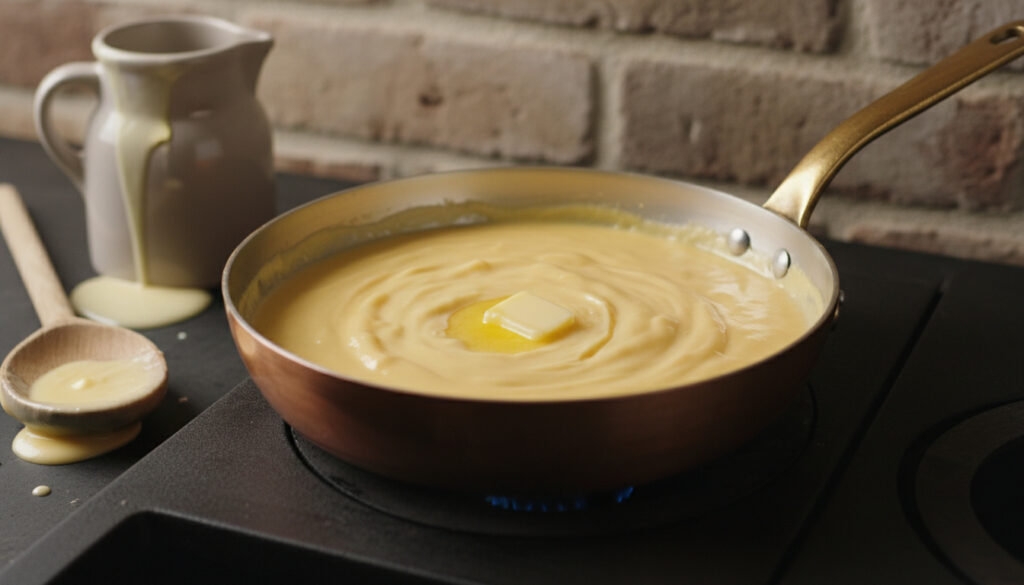
How to Make Cheese Sauce – Smooth Recipe Without Curdling
A perfect cheese sauce binds pasta, vegetables, and nachos with creamy richness without separating into oily puddles. Mastering this staple requires understanding heat control, emulsion science, and cheese selection rather than complex culinary school training.
Home cooks often encounter grainy textures or broken sauces when proteins clump under excessive heat. The solution lies in gentle temperature management and specific stabilizing ingredients that maintain the delicate suspension of fat and dairy solids.
Whether preparing a quick stovetop topping for broccoli or a base for macaroni, multiple reliable methods exist. From heavy cream reductions to sodium citrate emulsions, each technique offers distinct advantages for different dietary needs and time constraints.
How Do You Make Cheese Sauce?
| Time 10–20 minutes |
Servings 4–8 depending on method |
Difficulty Easy |
Calories 110–200 per serving |
- Always grate cheese fresh from blocks; pre-shredded varieties contain anti-caking agents that prevent smooth melting.
- Maintain low heat after the initial liquid simmer to prevent protein clumping and separation.
- Dijon mustard acts as a natural emulsifier, binding fats and water molecules for stability.
- Heavy cream provides inherent richness without requiring flour-based thickeners.
- Evaporated milk combined with cornstarch creates a nacho-style dip that remains fluid when cooled.
- Sodium citrate offers scientific precision for foolproof emulsion at any skill level.
- Whole milk works best when combined with processed cheeses like American for enhanced meltability.
| Ingredient | Quantity | Method Purpose | Critical Note |
|---|---|---|---|
| Heavy cream | ½ cup | Cream base | Provides fat for emulsion without flour |
| Sharp cheddar | 1 cup (4 oz) | Cream base | Freshly shredded, not pre-bagged |
| Dijon mustard | 2 tsp | All methods | Emulsifier stabilizing the sauce |
| Evaporated milk | 12 oz | Nacho-style | Creates pourable consistency |
| Cornstarch | 1½ tsp | Nacho-style | Prevents clumping when dusted on cheese |
| Whole milk | ¾ cup | White sauce | Prevents separation with higher fat content |
| American cheese | ¼ lb | White sauce | Processed for smooth melt |
| Monterey Jack | ¼ lb | White sauce | Mild flavor, good melt |
| Sodium citrate | 11g | Molecular method | Precise emulsifier ratio (4%) |
| Soft/mild cheese | 285g | Molecular method | Avoid pre-shredded varieties |
How to Make Cheese Sauce for Mac and Cheese?
The heavy cream method produces optimal results for pasta applications. Combine ½ cup heavy cream with 2 teaspoons Dijon mustard, ½ teaspoon garlic powder, and ⅛ teaspoon cayenne in a saucepan. Heat over medium until bubbling, then immediately reduce to low. Add 1 cup freshly shredded sharp cheddar gradually, stirring continuously until melted. This yields eight servings at approximately 110 calories each, coating noodles evenly without floury aftertaste. Healthy Recipes Blog and Fancy Apron Cooking both confirm this technique prevents the graininess common in rushed preparations.
What Is the Best Way to Make a Roux for Cheese Sauce?
Traditional Mornay sauce utilizes a roux—equal parts butter and flour cooked into a paste before milk incorporation. However, flourless methods using heavy cream or evaporated milk skip this step entirely, reducing cooking time and eliminating gluten. When employing a roux, cook the flour mixture for two to three minutes to eliminate raw starch taste before introducing dairy. Aleka’s Get Together notes that flour-based approaches can turn grainy if undercooked, whereas cream-based alternatives offer more forgiveness.
Why Does My Cheese Sauce Curdle and How to Prevent It?
Curdling occurs when cheese proteins clump together after exposure to high heat or acidic ingredients, causing the fat to separate into visible oil droplets. This breakdown happens most frequently when cooks rush the melting process or use direct high heat instead of gentle warming. The proteins in cheddar tighten and expel moisture above 170°F (77°C), creating an irreversible grainy texture.
Never add cheese to boiling liquid or over direct high heat. Proteins begin clumping at temperatures above 170°F (77°C), causing irreversible separation. Always reduce heat to low before incorporating dairy, and add cheese gradually off-heat if possible.
How to Fix Lumpy Cheese Sauce?
Remove the pan from heat immediately upon detecting graininess. Whisk vigorously while adding a small splash of cold milk or cream to cool the mixture rapidly. For severe lumpiness, blend the sauce briefly with an immersion blender, though prevention remains superior to correction. Peel with Zeal emphasizes that constant whisking during the melting phase eliminates most texture issues before they develop.
How Do You Thicken Cheese Sauce?
Cheese proteins naturally thicken when melted slowly into hot liquid through casein network formation. For additional body without flour, dust cornstarch over shredded cheese before adding it to the pan, allowing the starch granules to absorb excess moisture. High-fat liquids like heavy cream or evaporated milk require no additional thickeners due to inherent viscosity. Food science demonstrations confirm that approximately 1½ teaspoons of cornstarch per three cups of cheese prevents clumping while maintaining fluidity.
What Is the Best Cheese for Cheese Sauce?
Sharp cheddar provides robust flavor for pasta dishes, while American and Monterey Jack create the silky base characteristic of diner-style cheese sauces. Soft, mild cheeses like young Gouda or Fontina melt most reliably when using sodium citrate methods. The critical factor involves fat content and moisture levels rather than specific varieties.
Purchase blocks of full-fat cheese and shred them immediately before cooking. Pre-shredded bags contain cellulose or potato starch to prevent caking, which creates grainy textures in sauces. Sharp cheddar aged 12-18 months offers optimal flavor without excessive oil separation.
How to Make Cheese Sauce Without Flour?
Four distinct methods eliminate wheat entirely. The heavy cream approach relies on dairy fat and Dijon mustard for stability. Evaporated milk combined with cornstarch creates a gluten-free nacho dip that remains creamy when cooled. Whole milk melted with processed cheese yields white sauce ideal for fries. Finally, sodium citrate binds any cheese into smooth submission without starch or flour, following a precise ratio of 100% cheese to 93% liquid to 4% citrate by weight. Broccoli cheese sauce recipes demonstrate the heavy cream technique specifically.
How to Make Cheese Sauce Variations?
Beyond basic cheddar sauce, adaptations exist for specific dishes and dietary requirements. Each variation modifies the liquid base or stabilizing agents while maintaining the fundamental low-heat approach essential for emulsion stability.
Refrigerate cooled sauce in airtight containers for up to five days or freeze for two months. Thaw overnight in the refrigerator. Reheat gently over low heat with a splash of milk, whisking constantly. Microwave reheating requires 15-20 second bursts with stirring between intervals to prevent curdling.
Can You Make Cheese Sauce in the Microwave?
Microwave preparation works for single servings but requires precise timing. Heat the liquid base on high for 30-60 seconds until simmering, then remove and stir in grated cheese gradually using a fork or whisk. Return for 20-second bursts only if necessary, stirring between intervals. Quick sauce methods confirm stovetop preparation offers superior control and consistency compared to microwave variations.
Is Cheese Sauce the Same as Queso?
While both feature melted cheese, queso typically incorporates tomatoes, peppers, and spices into a processed cheese base for dipping. Traditional cheese sauce emphasizes pure dairy flavor with minimal seasoning, serving as a topping rather than a standalone dip. The evaporated milk method produces results closest to restaurant queso while maintaining the technical definition of a sauce.
What Is the Step-by-Step Timeline for Making Cheese Sauce?
- Preparation (2 minutes): Grate cheese from a solid block; measure liquid base and seasonings. Source
- Liquid Heating (3–5 minutes): Bring heavy cream or milk to gentle bubbling over medium heat, watching for surface ripples.
- Temperature Reduction (30 seconds): Reduce heat to low or remove pan from burner completely to prevent protein shock. Source
- Cheese Incorporation (3–5 minutes): Add shredded cheese one handful at a time, stirring continuously until fully melted before adding more. Source
- Seasoning (1 minute): Stir in mustard, spices, or hot sauce off-heat to preserve emulsion stability.
- Serving Immediate: Use within minutes for optimal texture, or transfer to a thermos for short-term holding.
What Methods Are Proven Effective and What Remains Uncertain?
| Established Techniques | Uncertain or Variable Factors |
|---|---|
| Low heat prevents curdling by keeping proteins below 170°F (77°C) | Exact microwave timing varies by appliance wattage and cheese moisture content |
| Freshly grated cheese melts smoother than pre-shredded due to lack of anti-caking agents | Vegan substitutions using cashew cream require empirical testing per brand of nutritional yeast |
| Sodium citrate at 4% ratio by weight creates foolproof emulsion | Specific shelf life beyond 5 days refrigeration depends on individual sterilization practices |
| Dijon mustard stabilizes fat-water emulsions through natural compounds | Optimal reheating temperature varies by sauce thickness and initial cheese variety |
| Cornstarch dusted at 1½ tsp per 3 cups cheese prevents clumping | Precise protein content affecting final texture varies by cheese manufacturer |
What Is the History Behind Cheese Sauce?
The classical French Mornay sauce—Béchamel enriched with Gruyère and Parmesan—dates to the 19th century, though British Welsh rarebit (cheese melted over toast) appeared earlier in culinary history. Traditional preparations relied on flour-based roux to stabilize the emulsion, creating a béchamel foundation before cheese addition. Just as the AG Meek Shoe Chain Cardiff Shutdown – End of 107-Year Legacy marked the conclusion of a longstanding commercial tradition, modern flourless techniques have largely supplanted classical roux methods in contemporary home kitchens.
Modern flourless methods reflect molecular gastronomy principles. Cheese contains casein proteins that clump when heated above 170°F or exposed to acid. Emulsifiers like sodium citrate bind calcium ions, preventing protein aggregation while allowing fat to remain suspended in water. Dijon mustard contains compounds that similarly stabilize the colloidal suspension without chemical additives.
What Do Culinary Experts Recommend?
Grate cheese for better melt. Pre-shredded varieties contain additives that prevent clumping in the bag but cause graininess in sauce.
— Culinary Technique Analysis, Modernist Cuisine Demonstration
The heavy cream method produces results in 10-20 minutes with only five ingredients, making it accessible for weeknight vegetables or quick macaroni.
— Healthy Recipes Blog
Avoid high heat to prevent curdling. The proteins in cheddar begin to tighten and expel fat when exposed to boiling temperatures.
— Peel with Zeal
How Can You Ensure Perfect Cheese Sauce Every Time?
Success requires freshly grated full-fat cheese, gentle low heat, and patience during the gradual melting process. Whether choosing the heavy cream approach for macaroni or the sodium citrate method for scientific precision, avoiding pre-shredded cheese and high temperatures prevents the common pitfalls of graininess and separation. While the How Many Miles Is 10K – Exact Conversion and Runner’s Guide helps athletes measure physical distance, measuring ingredients precisely and maintaining appropriate heat distance from boiling ensures consistent culinary success.
Frequently Asked Questions
What milk to use for cheese sauce?
Whole milk provides sufficient fat to prevent separation, while heavy cream creates richer results without additional thickeners. Skim milk lacks the fat content necessary for stable emulsions.
How to make cheese sauce thicker?
Increase cheese quantity gradually, or dust cornstarch over shredded cheese before melting. Cheese proteins naturally thicken when heated slowly in minimal liquid.
Can you freeze cheese sauce?
Yes, freeze in airtight containers for up to two months. Thaw overnight in the refrigerator before reheating gently with added milk to restore consistency.
How to reheat cheese sauce without curdling?
Warm slowly over low heat while whisking continuously, adding splashes of milk or cream. Microwave in 15-20 second bursts, stirring between intervals.
Is cheese sauce gluten-free?
Flourless methods using cream, evaporated milk, or sodium citrate contain no wheat. Traditional roux-based sauces require flour unless substituted with cornstarch.
How long does cheese sauce last in the fridge?
Store in airtight containers for up to five days. Quality degrades after this period due to protein breakdown and potential bacterial growth.
Can you make vegan cheese sauce?
Substitute cashew cream or full-fat coconut milk for dairy, using nutritional yeast for flavor and tapioca starch for stretch, though results vary by brand.
More related posts
 Seth Rollins: Biography, Age, Net Worth, Wife & Career
 Por che Panamera for Sale Ireland: Buying Guide & Year to Avoid
 Jaz Sinclair: Biography, Ethnicity, and Career
 Duke Dennis: Age, Net Worth, Real Name
 Kenneth Copeland: Biography, Net Worth, Health, and Ministries
 Harry Potter Studios London: Worth It? Cost, Time, and Tips
 Salt Bae: What Happened to the Meme Star and His Steakhouse Empire
 Skirting Board Guide: Types, Installation, Costs & FAQs
