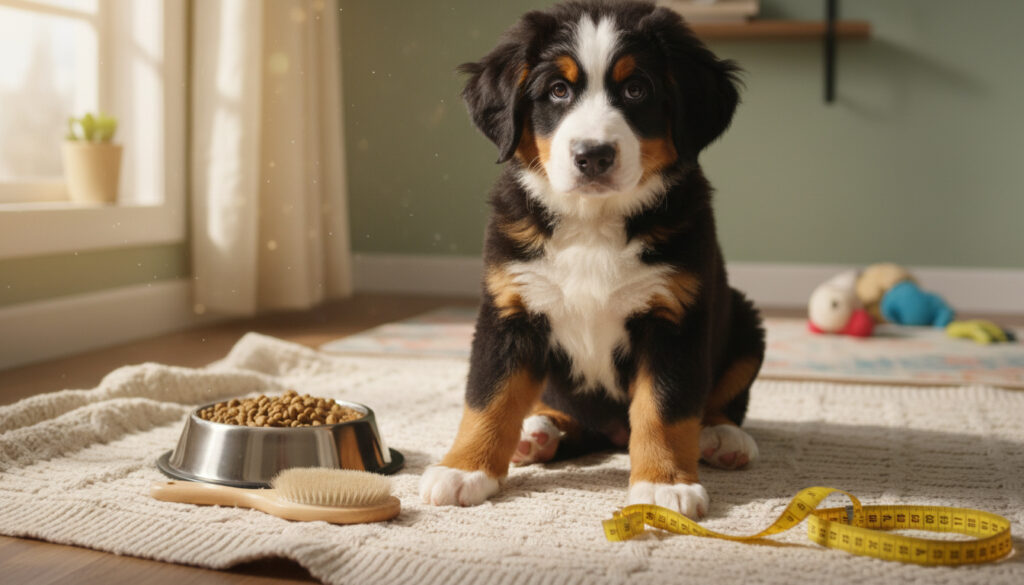
Bernese Mountain Dog Puppy – Cost Size Care Guide
Bernese Mountain Dog puppies captivate with their tri-color coats and gentle demeanor, yet prospective owners face significant financial and spatial commitments. These Swiss working dogs transform from tiny 5-pound newborns into 100-pound adults within their first year, demanding specialized nutrition and veterinary care throughout their relatively short lifespan.
The breed’s popularity continues rising among families seeking patient, affectionate companions. However, the initial purchase price represents only a fraction of the total investment required for proper care.
How Much Does a Bernese Mountain Dog Puppy Cost?
23-27.5 inches
70-115 lbs
7-10 years
Switzerland
Reputable breeders charge between $2,500 and $5,000 for Bernese Mountain Dog puppies in 2025, with prices reflecting extensive health testing of parent dogs. Lancaster Puppies notes that lower-priced puppies often lack genetic screening for hip and elbow dysplasia. Initial setup costs for crates, beds, and bowls range from $260 to $520.
First-year expenses typically reach $3,000 to $4,000 including veterinary care, food, and grooming, according to Better Pet. Annual costs stabilize around $1,000 to $2,800 thereafter, though unexpected medical issues common to the breed may increase these figures significantly.
- Rapid growth requires joint care and large-breed puppy food until 18 months
- High grooming needs demand weekly brushing and professional care during shedding seasons
- Cancer predisposition makes health-tested parentage essential for longevity
- First-year ownership costs exceed $3,000 beyond the initial purchase price
- Gentle temperament suits families but requires spacious homes with outdoor access
- Reputable breeder prices reflect genetic health screening and vaccination protocols
| Fact | Details |
|---|---|
| Puppy Weight at 8 Weeks | 10-20 lbs |
| Adult Height (Male) | 25-27.5 inches |
| Adult Height (Female) | 23-26 inches |
| Adult Weight Range | 70-115 lbs |
| Average Lifespan | 7-10 years |
| Coat Type | Long, tri-color (black, rust, white) |
| Daily Exercise Needs | Moderate to high |
| Monthly Food Cost | $50-$140 |
How Big Do Bernese Mountain Dog Puppies Get?
Growth Rate and Development
Bernese Mountain Dog puppies experience explosive growth during their first twelve months. Males typically reach 75 to 105 pounds by one year, while females achieve 65 to 90 pounds, according to Pawlicy. At six months, puppies stand 19 to 23 inches tall at the shoulder.
Nutritional support proves critical during this phase. CareCredit recommends AAFCO-compliant large-breed puppy formulas fed three to four times daily until six months of age. Overfeeding risks joint damage, while underfeeding compromises bone development.
By two months, puppies weigh 15-25 lbs (males) or 12-24 lbs (females). They gain approximately 10 pounds monthly during peak growth periods between three and six months.
Adult Size Specifications
Full maturity arrives between 18 and 24 months. Adult males ultimately stand 64 to 70 centimeters tall and weigh 38 to 50 kilograms, while females reach 58 to 66 centimeters and 36 to 48 kilograms, as documented by PetMD. Their substantial bone structure requires continued large-breed adult food formulations to maintain joint health.
Are Bernese Mountain Dog Puppies Good Family Dogs?
Temperament with Children
The breed exhibits exceptional patience with children, earning their reputation as “gentle giants.” Chewy highlights their affectionate nature and loyalty toward family members. These puppies typically welcome newcomers and coexist peacefully with other household pets when properly socialized.
Their working heritage manifests as calm indoor behavior paired with eagerness for outdoor activities. However, they develop separation anxiety if left alone for extended periods. Families should calculate exercise distances to ensure adequate daily activity for these energetic companions.
Space and Lifestyle Requirements
Apartment living presents challenges for this breed. Bernese Mountain Dogs thrive in homes with fenced yards where they can patrol and stretch their legs. Their thick double coats make them susceptible to overheating, requiring climate-controlled environments during warm months.
What Health Issues Affect Bernese Mountain Dog Puppies?
Common Genetic Conditions
Cancer represents the leading cause of mortality in the breed, significantly contributing to their shortened average lifespan of 7 to 10 years. Hip and elbow dysplasia affect many individuals, necessitating pre-breeding health screening through BVA or KC schemes. BorrowMyDoggy emphasizes the importance of verifying parent dog orthopedic certifications before purchasing.
Cancer prevalence in Bernese Mountain Dogs exceeds rates seen in most other breeds. Selecting puppies from lines with documented longevity histories may improve lifespan outcomes, though genetic guarantees remain impossible.
Lifespan and Preventative Care
Routine veterinary monitoring helps identify joint problems early. Owners should monitor stool signs for health monitoring as part of comprehensive wellness checks. Pet insurance premiums range from $65 to $135 monthly, reflecting the breed’s elevated medical risk profile according to Insurify.
Maintain ideal body weight throughout the dog’s life to minimize stress on joints and potentially reduce cancer risks associated with obesity.
How Fast Do Bernese Mountain Dog Puppies Grow?
The journey from newborn to adult follows a predictable trajectory marked by distinct developmental phases. Understanding these stages helps owners anticipate nutritional and exercise adjustments.
- 0-3 months: Puppies gain 2-3 pounds weekly, transitioning from nursing to solid large-breed puppy food. Socialization with humans and animals begins immediately.
- 3-6 months: Rapid bone development occurs. Males reach 50-70 lbs, females 45-65 lbs. Training foundations establish during this impressionable period.
- 6-12 months: Growth continues but slows. Weight reaches 75-105 lbs for males, 65-90 lbs for females. Height approaches 19-23 inches at the shoulder.
- 1-2 years: Final filling out occurs. Males reach 80-115 lbs, females 70-95 lbs. Mental maturity typically lags behind physical development.
Sources: Pawlicy Growth Charts, CareCredit Breed Guide
What is Certain and Uncertain About Bernese Mountain Dog Puppies?
Established Facts
- Adult size ranges between 23-27.5 inches and 70-115 lbs
- Gentle, patient temperament with family members
- Lifespan consistently averages 7-10 years
- Require large-breed puppy food until 18 months
- High grooming maintenance due to thick coat
Variable Factors
- Individual lifespan varies significantly based on genetic health testing
- Cancer onset age unpredictable despite screening
- Allergy severity in humans varies by individual dog
- Exact growth rates vary between bloodlines
- Training ease depends on early socialization consistency
Where Do Bernese Mountain Dogs Come From?
Originating in the Swiss Alps, Bernese Mountain Dogs served as all-purpose farm dogs for centuries. Their historical duties included pulling carts, driving dairy cattle, and serving as watchdogs for Bernese farmers. The breed nearly vanished during the industrialization of agriculture but survived through dedicated preservation efforts in the early 1900s.
Their thick tri-color coats evolved to withstand harsh alpine winters. Modern breeding programs maintain these working instincts while emphasizing the stable temperament essential for family companionship. The American Kennel Club officially recognized the breed in 1937.
What Do Breed Experts Say?
“Gentle giants” who combine strong working instincts with calm indoor demeanor.
— American Kennel Club Breed Standard
Easily trainable with positive reinforcement, though prone to boredom and separation anxiety if understimulated.
— Veterinary Behavior Specialists, PetMD
Is a Bernese Mountain Dog Puppy Right for Your Family?
Families with adequate space, time for daily grooming, and financial resources for potential veterinary interventions find ideal companions in this breed. The initial investment of $3,000-$5,000 for a well-bred puppy pales against the decade of loyalty, affection, and gentle companionship these dogs provide. Prospective owners must commit to the breed’s exercise requirements and shortened lifespan, weighing these factors against the profound joy of sharing life with these magnificent Swiss working dogs.
Frequently Asked Questions
Best food for Bernese Mountain Dog puppy?
AAFCO-compliant large or giant breed puppy formulas support healthy bone development. Feed puppies three to four times daily until six months, then twice daily until 18 months to prevent joint issues.
Are Bernese Mountain Dog puppies easy to train?
Yes, they respond well to positive reinforcement methods. Start obedience training early to channel their working instincts constructively and prevent separation anxiety behaviors.
Where to find reputable Bernese Mountain Dog puppy breeders?
Seek breeders providing OFA or BVA hip and elbow certifications for parent dogs. Expect prices between $2,500-$5,000 for health-tested lines. Avoid sources unable to provide genetic screening documentation.
How much exercise does a Bernese Mountain Dog puppy need?
Puppies require moderate daily exercise adjusted for age. Avoid high-impact activities until growth plates close around 18 months. Adult dogs need substantial outdoor activity and mental stimulation.
Do Bernese Mountain Dog puppies shed heavily?
Yes, they possess thick double coats requiring weekly brushing year-round and professional grooming during seasonal shedding periods. Monthly grooming costs average $75-$160.
More related posts
 Women’s Jeans: Trends, Best Brands & Styles for 50+ (2026 Guide)
 Best Time to Take Creatine: What Science Says About Timing
 Pa O’Dwyer Death: Irish Strongman Dies at 40
 Bonnie Tyler Health Updates: What Happened to the Singer
 Sammy Virji: Ethnicity, Real Name, Genre, Booking Fee
 John Terry Biography, Height, Clubs, Wife, and Coaching Career
 Luke Humphries: Net Worth, Children, Partner, and Career Guide
 Minecraft Mods: Top 10 Best Mods, Installation Guide & Legality
