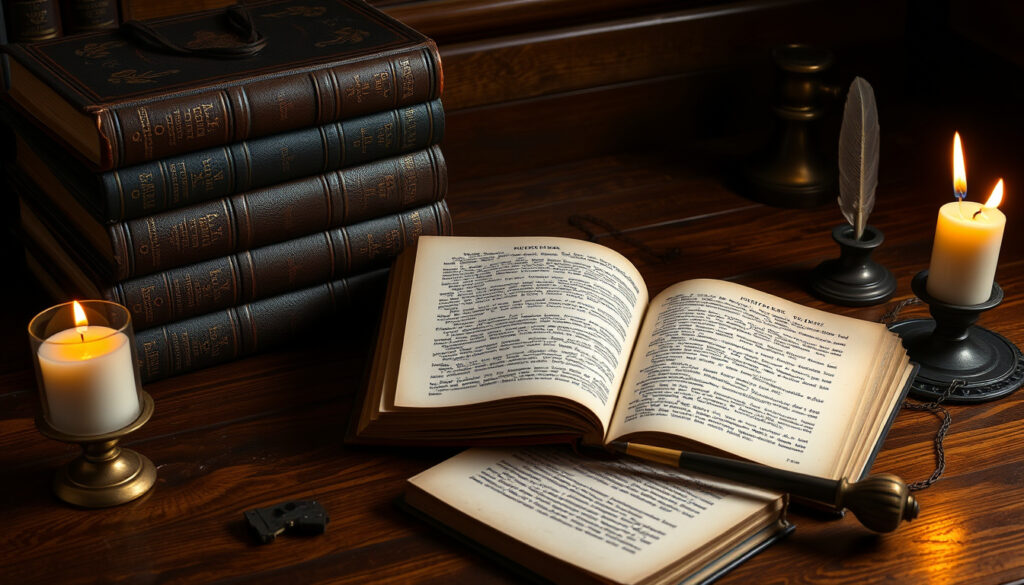
Charles Dickens Books: Complete Guide to His Novels
Anyone who’s tried to pick a first Charles Dickens book knows the feeling: the list is long, the Victorians are wordy, and advice from friends swings wildly between “start with Oliver Twist” and “don’t start with Bleak House.” This guide cuts through the noise with a fact-based tour of Dickens’ 15 novels, from the one that made him famous to the one he left unfinished, so you can decide which door into Victorian fiction fits you best.
Novels written by Charles Dickens: 15 ·
Estimated copies of A Tale of Two Cities sold: over 200 million ·
Film adaptations of A Christmas Carol: over 50 ·
First published novel: The Pickwick Papers (1836) ·
Most recent complete novel: The Mystery of Edwin Drood (unfinished, 1870)
Quick snapshot
- Dickens completed 15 novels (Charles Dickens Info)
- A Tale of Two Cities is his best-known work of historical fiction (Goodreads author page)
- A Christmas Carol continues to inspire adaptations in every creative medium (Wikipedia free encyclopedia)
- Our Mutual Friend is the last novel Dickens completed before his death (Charles Dickens Info)
- Which novel is “best to start with” is subjective — different readers prefer different entry points (Penguin Books)
- Difficulty rankings vary by reader; no consensus on hardest novel (Substack / Biblioll College)
- The “5 Charles Dickens books” often mentioned have no definitive list across sources (Penguin Books)
- 1836: The Pickwick Papers launched in serial form (Wikipedia)
- 1843: A Christmas Carol published as a Christmas book (Wikipedia)
- 1859: A Tale of Two Cities published (Wikipedia)
- 1870: The Mystery of Edwin Drood left unfinished when Dickens died (Charles Dickens Info)
- Dickens’ works continue to be adapted into film, TV, and stage — A Christmas Carol alone has over 50 film adaptations (Wikipedia)
- New editions and modern retellings keep his stories in print for new generations (Wikipedia)
- Literary scholars still debate the intentions behind The Mystery of Edwin Drood (Charles Dickens Info)
Seven key facts about Charles Dickens, one pattern: even the basics reveal a writer who balanced massive output with near-constant personal and social scrutiny.
| Attribute | Detail |
|---|---|
| Full name | Charles John Huffam Dickens |
| Born | 7 February 1812, Portsmouth, England |
| Died | 9 June 1870, Higham, England |
| Number of published novels | 15 |
| Most famous novel | A Tale of Two Cities |
| Most adapted work | A Christmas Carol |
| Hardest novel per critics | Bleak House |
What is Charles Dickens most famous book?
A Tale of Two Cities vs. Great Expectations vs. A Christmas Carol
- A Tale of Two Cities (1859) is widely regarded as his best-known work of historical fiction, set during the French Revolution (Goodreads author page).
- Great Expectations (1861) is one of his most popular coming-of-age stories and frequently appears on school curricula (Wikipedia free encyclopedia).
- A Christmas Carol (1843) is technically a novella, not a novel, but it has become a cultural phenomenon through countless adaptations (Wikipedia).
Why A Tale of Two Cities is often called his best-known novel
- It opens with one of the most famous lines in English literature: “It was the best of times, it was the worst of times.”
- Its setting — London and Paris during the Revolution — gives it a dramatic, high-stakes scope that stands apart from his usual social satire (History Hit media outlet).
- Goodreads summarizes it as “his best-known work of historical fiction” (Goodreads).
How A Christmas Carol became a cultural phenomenon
- Published in December 1843, the novella was an instant success and has never been out of print (Wikipedia).
- It has been adapted into over 50 films, plus TV specials, stage plays, operas, and even a Muppet version (Wikipedia adaptation list).
- The phrase “Bah, humbug!” entered everyday language as shorthand for cynicism.
The pattern: Dickens’ most famous works are those that combine a strong central hook — revolution, redemption, or a mysterious benefactor — with characters who feel archetypal. A Tale of Two Cities wins on sheer scale, but A Christmas Carol wins on familiarity.
What are the essential Charles Dickens books?
The 15 novels listed by publication date
- 1836: The Pickwick Papers (Wikipedia)
- 1837: Oliver Twist (Wikipedia)
- 1838: Nicholas Nickleby
- 1840: The Old Curiosity Shop
- 1841: Barnaby Rudge
- 1843: Martin Chuzzlewit
- 1846: Dombey and Son (History Hit)
- 1849: David Copperfield (History Hit)
- 1852: Bleak House (History Hit)
- 1854: Hard Times
- 1855: Little Dorrit
- 1859: A Tale of Two Cities
- 1860: Great Expectations
- 1864: Our Mutual Friend
- 1870: The Mystery of Edwin Drood (unfinished)
David Copperfield — the autobiographical novel
- Often described as Dickens’ “favourite child” and the most autobiographical of his works (Charles Dickens Info fan site).
- It traces the life of David from a miserable childhood to literary success — mirroring Dickens’ own story.
- Many critics consider it his most emotionally resonant novel.
Bleak House — the most complex
- Cited as Dickens’ most intricate novel, with a sprawling plot and a huge cast (Charles Dickens Info).
- The novel satirizes the British legal system through the endless Chancery case of Jarndyce and Jarndyce.
- Its dual narration (first-person by Esther Summerson and omniscient) adds structural complexity.
What this means: the “essential” Dickens list is the full 15-novel canon, but for most readers the core five are Oliver Twist, David Copperfield, Bleak House, A Tale of Two Cities, and Great Expectations.
What is the best Dickens book to start with?
Oliver Twist for a straightforward plot and social themes
- Linear story — an orphan’s journey through London’s underworld — with a clear good-versus-evil arc (Penguin Books).
- Introduces classic Dickens elements: child poverty, institutional cruelty, and a cast of memorable villains (Fagin, Bill Sikes).
- Relatively short by Dickens standards (around 350 pages in most editions).
A Christmas Carol for brevity and festive appeal
- A novella of about 30,000 words — can be read in a single evening (Penguin Books recommends this as a strong starting point).
- The ghost story structure and clear moral lesson make it the most accessible Dickens for new readers.
- Its cultural ubiquity means most people already know the plot, so comprehension hurdles are low.
Great Expectations for a relatable protagonist and moderate length
- First-person narrative from Pip, whose desire to become a gentleman is both ambitious and heartbreaking (Penguin Books identifies it as one of the easiest).
- Mid-length for Dickens (around 500 pages) and one of his most tightly plotted works.
- The mystery of Pip’s anonymous benefactor keeps the pages turning.
What is Charles Dickens’ hardest book to read?
Bleak House: complex plot and large cast
- Its two narrative voices and diffuse plot can overwhelm new readers (Charles Dickens Info).
- The novel’s dense legal satire requires some familiarity with Victorian England’s court system.
- It runs to about 900 pages in standard editions.
Little Dorrit: dense social commentary
- A satire of bureaucracy and debtors’ prisons that demands patience (History Hit).
- Its winding, interlocking subplots make it one of the most challenging Dickens works.
The Mystery of Edwin Drood: unfinished and requires conjecture
- Dickens died after writing only half the planned story (Charles Dickens Info).
- No definitive solution to the central mystery exists, leaving readers to guess the ending — a joy for scholars but a frustration for casual readers.
The catch: the same qualities that make these novels rewarding for advanced readers — narrative complexity, institutional satire, unfinished puzzles — are exactly the qualities that trip up beginners. Knowing your own tolerance for ambiguity is half the battle.
How many books did Charles Dickens write?
15 full-length novels
- The accepted count among Dickens scholars is 15 novels, including the unfinished The Mystery of Edwin Drood (Charles Dickens Info).
- These form the core of his literary legacy and are the works typically referred to as “Dickens’ novels.”
5 Christmas books (including A Christmas Carol)
- In addition to A Christmas Carol, Dickens wrote The Chimes, The Cricket on the Hearth, The Battle of Life, and The Haunted Man (History Hit).
- These novellas are shorter and often left out of novel counts, but they are important to his holiday brand.
Short story collections, sketches, and non-fiction
- Sketches by Boz (1836) collected his early journalism (Goodreads).
- He also wrote travel books like American Notes and edited periodicals, contributing hundreds of articles and stories.
- The authoritative bibliography lists “more than a dozen major novels, short stories, plays, and nonfiction” (Wikipedia bibliography page).
The pattern: when someone asks “how many Dickens books are there?” they almost always mean the 15 novels. But the full answer — novels plus Christmas books, stories, and nonfiction — gives a more complete picture of his output. The distinction between a novel and a novella matters, especially for new readers deciding what to read.
Are Charles Dickens books suitable for kids?
A Christmas Carol as a family-friendly option
- The central redemption arc, ghostly warnings, and happy ending make it appropriate for children aged 8+ (Penguin Books).
- Many picture-book and abridged versions are specifically marketed for children.
Oliver Twist adaptations for younger audiences
- Film adaptations (like the 1968 musical) soften the book’s darker elements.
- The original novel contains scenes of child abuse, prostitution, and murder that may require parental guidance for readers under 12.
Challenges: length, vocabulary, and dark themes
- Dickens novels were originally published as serials for adults and contain complex sentences, dated slang, and social criticism that young readers may find difficult.
- Most reputable children’s editions are abridged or fully adapted to remove violence and simplify language.
- For independent teen readers, Great Expectations and A Tale of Two Cities are commonly assigned in high school curricula.
Parents choosing a Dickens for their child must weigh cultural literacy against emotional maturity. The safest bet: let the kids watch the film adaptations first, then offer the original book for comparison once they’re old enough to handle the ambiguity.
What the experts say about reading Dickens today
“A Christmas Carol remains especially popular and continues to inspire adaptations in every creative medium.”
— Wikipedia free encyclopedia
“His 1859 novel, A Tale of Two Cities, set in London and Paris, is his best-known work of historical fiction.”
— Goodreads author page
“Lists the 15 novels with publication dates from The Pickwick Papers (1836) to The Mystery of Edwin Drood (1870).”
— Charles Dickens Info dedicated fan site
Making sense of the canon: where to go next
Dickens wrote 15 novels, five Christmas books, and hundreds of shorter pieces over 34 years. The sheer volume can feel like a wall, but the most important insight is simple: you don’t need to read everything to understand why he matters. Pick the novel that matches your patience level and your interests — a criminal underworld, a legal satire, a romance in Revolutionary France — and let that one book decide whether you want more. For a first-time reader facing a library of Victorian paper, the smartest move is to start with one of the accessible four (A Christmas Carol, Oliver Twist, Great Expectations, or David Copperfield) and leave the heavy hitters (Bleak House, Little Dorrit) for later. For the parent guiding a curious teen, the route is even clearer: let the movies and graphic novels lead, then hand them the real thing when they’re ready. Dickens will still be waiting.
coffeebooksandcake.com, youtube.com, audible.com, en.wikipedia.org, reddit.com, attualitavista.it
For readers who want to explore his works chronologically, a complete list of his novels in order offers a clear starting point.
Frequently asked questions
What genre did Charles Dickens write?
Dickens is primarily associated with Victorian fiction, specifically social novels, coming-of-age stories, and historical fiction. His works often combine comedy, tragedy, and satire.
What was Charles Dickens’ first novel?
The Pickwick Papers, first published in serial form from March 1836 to November 1837 (Wikipedia).
What is the theme of Great Expectations?
The novel explores class mobility, personal growth, and the illusion of social improvement. Pip’s journey from an orphaned blacksmith’s apprentice to a gentleman (and back) questions the true meaning of “gentility.”
Did Charles Dickens write under a pen name?
Yes, he used the pen name “Boz” for his early sketches and first novel. Sketches by Boz (1836) was published under that name (Goodreads).
What is the chronological order of Dickens’ novels?
The 15 novels span The Pickwick Papers (1836) through The Mystery of Edwin Drood (1870). A full chronological list is included in the “Essential books” section above.
How many words are in a typical Dickens novel?
Novels range from about 100,000 words (A Tale of Two Cities) to over 350,000 (Bleak House). The average is around 200,000 words.
Is A Tale of Two Cities based on a true story?
No, it is a work of historical fiction. The French Revolution provides the backdrop, but the characters and plot are invented (Wikipedia).
What is the most popular Dickens adaptation?
A Christmas Carol holds the record, with over 50 film adaptations alone, plus countless stage productions, TV specials, and parodies (Wikipedia).
More related posts
 Joe Duttine: Biography, Relationship With Sally Carman, and More
 Father’s Day UK 2024: Date, Gifts, and Why Dads Matter
 Is Vaping Bad for You? Risks, Lung Healing & Comparison
 Benidorm Actors: Full Cast List and Departures
 Shea Lacey: Biography, Family & Career Update
 Orville and Wilbur Wright: Aviation Pioneers
 Jimmy Connors Today: Podcast, Family, Life After Tennis (2024)
 Nicholas Winton: The Man Who Saved 669 Children from Holocaust
