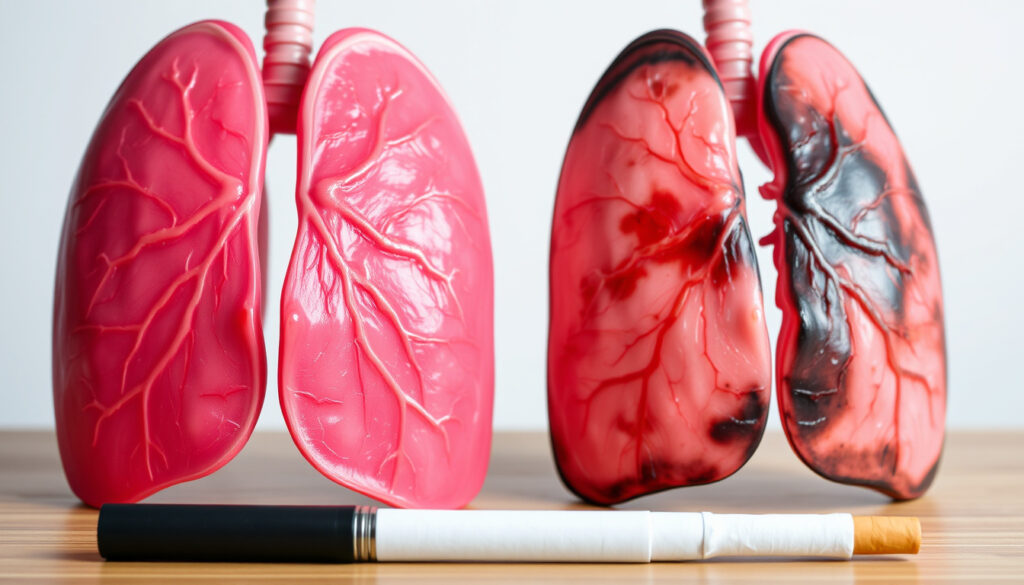
Is Vaping Bad for You? Risks, Lung Healing & Comparison
You’ve probably seen someone take a long drag from a sleek device and wondered if those sweet clouds are doing any real harm. The short answer: vaping isn’t harmless, but it’s far less dangerous than smoking cigarettes, according to Cancer Research UK — though researchers still don’t have definitive answers about its long-term effects on lungs, heart, and overall health.
Heart and lung health: Negative impact (Johns Hopkins Medicine) ·
Secondhand vapor: No evidence of harm (NHS (UK national health service)) ·
Relative harm vs smoking: Far less harmful (Cancer Research UK) ·
Lung infection risk: Increased (American Lung Association)
Quick snapshot
- Vaping is less harmful than smoking (Cancer Research UK)
- Nicotine in e-cigarettes is highly addictive (CDC (U.S. public health agency))
- EVALI outbreak was caused by vitamin E acetate in THC vapes (CDC)
- Vaping increases risk of lung infections (American Lung Association)
- Long-term cardiovascular effects
- Whether vaping causes cancer in humans
- Impact of chronic vaping on oral health
- Long-term effectiveness for smoking cessation
- 2003: First modern e-cigarette invented in China (American Lung Association)
- 2016: FDA gains authority to regulate e-cigarettes (CDC)
- 2019: EVALI outbreak linked to vitamin E acetate (CDC)
- 2020: FDA bans most flavored pod-based e-cigarettes (FDA)
- FDA continues premarket review of e-cigarettes
- Long-term studies on cancer risk expected in coming decade
- UK government exploring vaping as NHS smoking cessation aid
- Further regulation of flavors and marketing likely
The table below consolidates key evidence on vaping’s health impacts.
| Factor | Evidence | Source |
|---|---|---|
| Nicotine addictiveness | Highly addictive, harms adolescent brain development | CDC |
| Relative harm to smoking | Far less harmful, but not risk-free | Cancer Research UK |
| Common health effects | Pneumonia, bronchitis, heart issues | American Lung Association, Johns Hopkins Medicine |
| Secondhand effects | No evidence of harm to bystanders | NHS |
| EVALI cause | Vitamin E acetate in THC vapes | CDC |
| Lung infection risk | Increased pneumonia and bronchitis | American Lung Association |
Is vaping worse than smoking cigarettes?
Comparing vaping to smoking is like comparing a scooter to a motorcycle — both have risks, but one is clearly more dangerous. Cancer Research UK states that vaping is far less harmful than smoking because it doesn’t contain tobacco or produce tar and many of the cancer-causing chemicals found in cigarette smoke. However, nicotine is still highly addictive, as Johns Hopkins Medicine notes.
Is one vape equal to 20 cigarettes?
There is no simple conversion. The CDC emphasizes that e-cigarette nicotine content varies widely — some pod systems deliver as much nicotine as a pack of cigarettes, while others deliver far less. The harm picture is not about puff equivalence but about the mix of chemicals being inhaled.
The trade-off: switching entirely from smoking to vaping reduces exposure to toxicants, but the nicotine addiction persists. For non-smokers, especially youth, taking up vaping introduces addiction without any offsetting benefit.
Smokers who switch completely to vaping almost certainly reduce their health risk. Non-smokers who start vaping gain only addiction and lung irritation.
Do your lungs still heal if you vape?
The lungs have a remarkable ability to repair themselves — the American Lung Association reports that after quitting vaping, the risk of infections drops and normal cleaning mechanisms begin to recover. But constant irritation can lead to permanent changes. Cleveland Clinic warns that some lung damage — like scarring — is irreversible, and conditions like asthma and COPD can become chronic.
How long does it take for your lungs to heal from vaping?
Healing timelines vary widely. Lung.org suggests that improvements in coughing and shortness of breath can begin within weeks, but full recovery of cilia function may take months. The longer and heavier the vaping history, the slower the healing.
What this means: the body can bounce back, but only if the irritation stops. For heavy users, some changes may be permanent.
What are 5 risks of vaping?
Research points to several well-documented dangers. Johns Hopkins Medicine lists five major concerns:
- Lung infections — The American Lung Association finds pneumonia and bronchitis are more common in people who vape.
- Nicotine addiction — The CDC states nicotine harms adolescent brain development and is highly addictive.
- Popcorn lung risk — Diacetyl, used in some flavorings, can cause bronchiolitis obliterans (Johns Hopkins Medicine).
- Heart and blood vessel effects — Johns Hopkins Medicine notes formaldehyde in aerosol can contribute to heart disease.
- Unknown cancer risk — Cancer Research UK says vaping has not been around long enough to confirm or rule out cancer.
Can vaping cause cancer?
Unlike smoking, vaping doesn’t contain tobacco — the main driver of lung cancer. But the CDC warns that e-cigarette aerosol contains cancer-causing chemicals such as formaldehyde and nitrosamines. Johns Hopkins says it remains a concern, and long-term studies are needed.
Is vaping bad for your teeth?
The CDC notes that some e-liquid ingredients can be safe to eat but harmful to inhale — the same applies to oral tissues. Nicotine reduces blood flow to gums, and propylene glycol can dry out the mouth, increasing cavity risk. The full impact is still under investigation.
What are 10 dangers of vaping?
Beyond the five above, additional documented risks include: 6) EVALI (potentially fatal lung injury from contaminated products), 7) seizures (reported in some users), 8) accidental poisoning from liquid nicotine, 9) damage to adolescent brain development (nicotine), 10) increased risk of transitioning to smoking among youth.
For every risk confirmed, another is still unknown. Vapers are essentially in a long-term experiment — the first generation of users is only now reaching 15+ years of use.
Is 100 puffs of vape a day bad?
Any daily nicotine intake carries risk. The NHS says no level of nicotine is fully safe for youth or non-smokers. Heavy use — defined by frequency and nicotine strength — increases exposure to toxicants like formaldehyde. Johns Hopkins Medicine adds that high nicotine intake can spike blood pressure and heart rate.
Is 1 puff of vape a day bad?
Even occasional use is not risk-free. The CDC states that any use of tobacco products — including e-cigarettes — exposes users to harmful chemicals. For someone who doesn’t smoke, one puff is introducing addiction potential with zero benefit.
The implication: frequency matters, but there is no safe threshold for nicotine. The less you use, the lower the risk, but risk never reaches zero.
Can vaping cause cancer?
We covered this above, but to reiterate the key point: Cancer Research UK is clear that vaping is significantly less carcinogenic than smoking — but it is not proven to be completely free of cancer risk. The presence of formaldehyde and other carcinogens in some aerosols makes it a plausible long-term concern.
What are the long-term effects of vaping?
Because e-cigarettes only entered the market around 2007 in the West, we lack 30-year data. The CDC acknowledges that scientists still have a lot to learn about short- and long-term health effects. Current evidence points to lung inflammation, cardiovascular strain, and addiction as established effects; cancer, autoimmune disease, and fertility impacts remain speculative but are actively studied.
Why this matters: vapers today are the control group of an unplanned experiment. The next decade will be critical for understanding whether chronic vaping causes diseases that take decades to develop.
Here is how vaping stacks up against smoking across key dimensions.
| Factor | Smoking | Vaping |
|---|---|---|
| Contains tobacco | Yes | No |
| Produces tar | Yes | No |
| Known carcinogens | 70+ | Some present (formaldehyde, nitrosamines) |
| Secondhand harm | Proven cause of disease | No evidence of harm to bystanders (NHS) |
| Addiction potential | Very high | High (nicotine) |
| Lung disease risk | Very high | Moderate (COPD, asthma, infections) |
Vaping pros and cons
Upsides
- Far less harmful than smoking for established smokers who switch completely (Cancer Research UK)
- May help some adults quit smoking (CDC)
- No secondhand tobacco smoke risk (NHS)
Downsides
- Nicotine addiction persists (CDC)
- Increased risk of lung infections (American Lung Association)
- Unknown long-term cancer risk (Johns Hopkins Medicine)
- Risk of EVALI from contaminated products (CDC)
- Adolescent brain development harmed by nicotine (CDC)
Timeline: key moments in vaping history
- : First modern e-cigarette invented in China (American Lung Association).
- : FDA gains authority to regulate e-cigarettes under the Tobacco Control Act (CDC).
- : EVALI outbreak linked to vitamin E acetate in THC vapes; 68 deaths reported (CDC).
- : FDA bans most flavored pod-based e-cigarettes to curb youth use (FDA).
Confirmed facts vs what’s still unclear
Confirmed facts
- Vaping is less harmful than smoking (Cancer Research UK)
- Nicotine is highly addictive (CDC)
- EVALI caused by vitamin E acetate (CDC)
- Vaping increases risk of lung infections (American Lung Association)
What’s unclear
- Long-term cardiovascular effects
- Whether vaping causes cancer in humans
- Impact of chronic vaping on oral health
- Effectiveness of vaping for smoking cessation in the long term
What experts say
“Vaping is far less harmful than smoking.”
Cancer Research UK (national cancer charity)
“There is no evidence so far that vaping is harmful to people around you.”
“Research suggests vaping is bad for your heart and lungs.”
“Pneumonia, bronchitis, and other lung infections are more common in people who vape.”
American Lung Association (lung health authority)
Related reading
- Signs of a Heart Attack: Symptoms and Warnings to Know
- Blood Pressure Chart by Age and Gender: Normal Ranges
healthcare.utah.edu, pmc.ncbi.nlm.nih.gov, my.clevelandclinic.org, youtube.com, nhs.uk
For a detailed breakdown of the specific dangers, you can explore the health risks of vaping covered in our companion article.
Frequently asked questions
Is vaping bad for your teeth?
Yes — the CDC notes that nicotine reduces blood flow to gums, and propylene glycol can dry out the mouth, increasing cavity risk. The full extent of oral health impact is still being studied.
Is one vape equal to 20 cigarettes?
There’s no direct equivalence. The CDC says nicotine content varies widely between devices; some pod systems deliver as much nicotine as a pack of cigarettes, others far less.
Does vaping cause popcorn lung?
Some e-liquid flavorings contain diacetyl, a chemical linked to bronchiolitis obliterans (“popcorn lung”). Johns Hopkins Medicine warns that diacetyl can cause permanent scarring in the smallest airways.
Is secondhand vapor harmful?
The NHS states there is no evidence so far that vaping is harmful to bystanders, but the aerosol contains nicotine and fine particles — caution is still warranted in enclosed spaces.
Can vaping cause seizures?
The FDA has received reports of seizures in people who use e-cigarettes, particularly among youth. The cause is not fully understood but may be linked to nicotine toxicity.
Is vaping a safe way to quit smoking?
The CDC says e-cigarettes may help some adults who smoke if they switch completely, but they are not FDA-approved as smoking cessation aids. The NHS considers vaping a less harmful alternative for smokers trying to quit, but recommends using regulated products and having a plan to eventually stop nicotine.
For the UK smoker trying to quit, the evidence is clear: switching to vaping is a net health gain. But for a non-smoker — especially a teenager — the decision to start vaping introduces addiction and lung irritation for no benefit. The trade-off is stark: harm reduction for current smokers, harm introduction for everyone else.
More related posts
 Mr Motivator: What He Does Now, Net Worth, Wife, and More
 Pa O’Dwyer Death: Irish Strongman Dies at 40
 Dan Snow: Nepo Baby, Historian, and History Hit Founder
 Annabelle Wallis: Verified Facts, Tom Cruise Kiss & Career
 Cast of Ugly Betty: Main Actors, Characters & Seasons
 Viggo Mortensen: The Polyglot Actor Behind Aragorn
 Diane Keaton Death: Pneumonia, Life, and Legacy
 Robert Dyas Discount Code: 50% Off + Student Offers
